

68 Circular Road, #02-01 049422, Singapore
Revenue Tower, Scbd, Jakarta 12190, Indonesia
4th Floor, Pinnacle Business Park, Andheri East, Mumbai, 400093
Cinnabar Hills, Embassy Golf Links Business Park, Bengaluru, Karnataka 560071


Connect With Us



68 Circular Road, #02-01 049422, Singapore
Revenue Tower, Scbd, Jakarta 12190, Indonesia
4th Floor, Pinnacle Business Park, Andheri East, Mumbai, 400093
Cinnabar Hills, Embassy Golf Links Business Park, Bengaluru, Karnataka 560071
Connect With Us
68 Circular Road, #02-01 049422, Singapore
Revenue Tower, Scbd, Jakarta 12190, Indonesia
4th Floor, Pinnacle Business Park, Andheri East, Mumbai, 400093
Cinnabar Hills, Embassy Golf Links Business Park, Bengaluru, Karnataka 560071
Request Custom Transcript
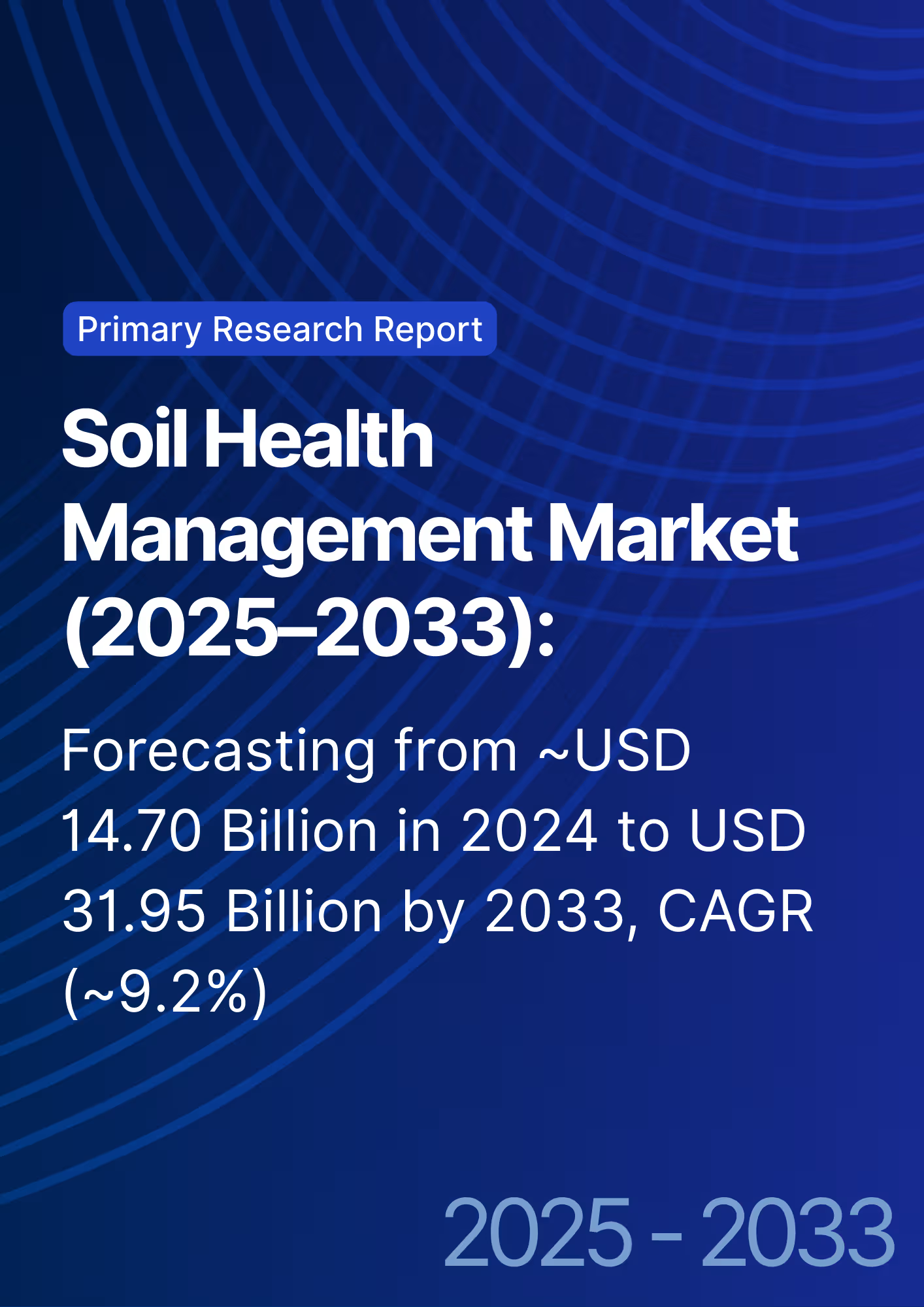
Soil Health Management Market (2025–2033): Forecasting from ~USD 14.70 Billion in 2024 to USD 31.95 Billion by 2033, CAGR (~9.2%) | Organic Amendments, Soil Conditioners & Fertility Enhancers Drive Growth
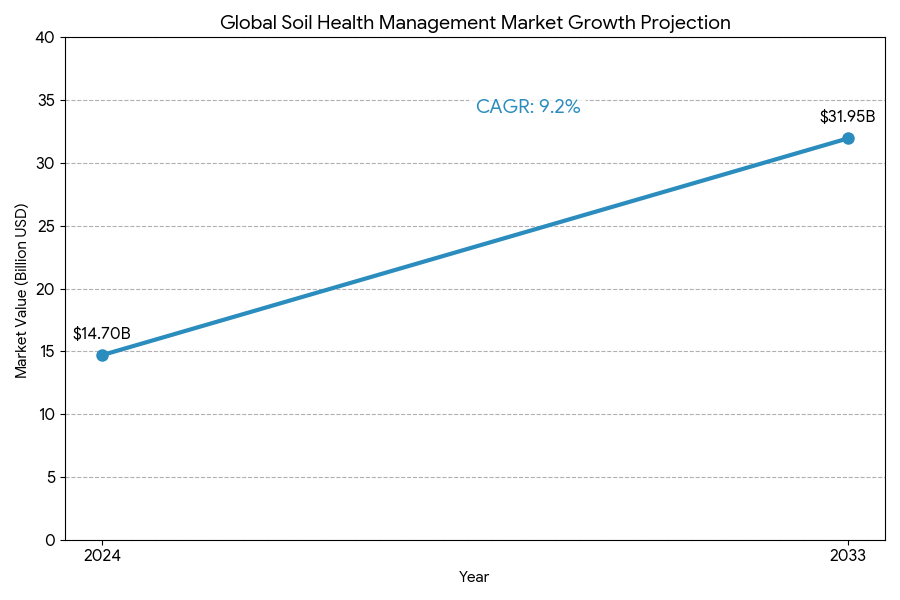
The global soil health management market is projected to grow from USD 14.70 billion in 2024 to USD 31.95 billion by 2033, at a CAGR of 9.2%. This growth is driven by the rising demand for organic amendments, soil conditioners, and fertility enhancers to improve soil health and agricultural productivity. As sustainable agriculture practices gain traction, the market is benefiting from an increased adoption of biological solutions that enhance soil fertility, structure, and water retention. The demand for organic fertilizers and bio-based soil treatments is accelerating, particularly in regions with intensive agriculture, where soil degradation is a concern. The growing awareness about soil health and government initiatives supporting sustainable farming are also fueling market expansion.
What's Covered?
Report Summary
Key Takeaways
- Market to grow from USD 14.70B (2024) to USD 31.95B (2033) at 9.2% CAGR.
- Organic amendments will dominate, accounting for 40% of total market share by 2033.
- Soil conditioners projected to grow at 10% CAGR, driven by their role in improving soil structure.
- Fertility enhancers to contribute 30% of market share by 2030.
- North America and Europe will account for 55% of market share due to sustainable farming trends.
- Asia-Pacific to grow at 12% CAGR, driven by China and India’s agricultural reforms.
- Government initiatives to promote soil health management and organic farming.
- Biological products such as bio-based soil conditioners are gaining popularity.
- Sustainable agriculture practices pushing the demand for low-impact soil treatments.
- Increased awareness about soil degradation and its impact on food security boosting market demand.
Key Metrics
Market Size & Share
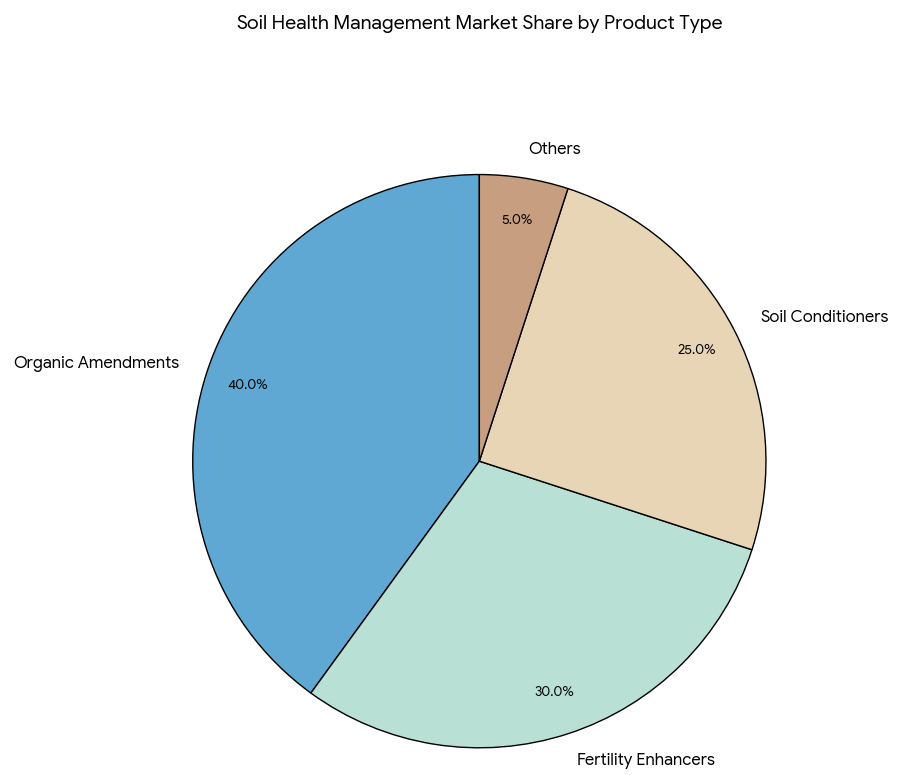
The global soil health management market will grow from USD 14.70 billion in 2024 to USD 31.95 billion by 2033, driven primarily by the increasing adoption of organic amendments, soil conditioners, and fertility enhancers. Organic amendments are expected to contribute to 40% of the total market demand by 2033, while soil conditioners and fertility enhancers will represent 25% and 30% of the market, respectively. North America and Europe are expected to capture 55% of the total market share due to their focus on sustainable agriculture and regulatory support for organic farming practices. Asia-Pacific, particularly China and India, is projected to grow at 12% CAGR, driven by agricultural reforms and government focus on soil health.
Market Analysis
The demand for soil health management solutions is being driven by the growing recognition of the importance of soil fertility and its direct impact on crop yields. Organic amendments, such as compost and bio-based fertilizers, are gaining traction as farmers seek eco-friendly and sustainable alternatives to conventional chemical inputs. Soil conditioners, which improve soil structure, are essential for enhancing the soil’s water retention capacity and promoting better root growth. Fertility enhancers, including products like humic acid and micronutrients, play a critical role in replenishing nutrient-depleted soils, particularly in regions with intensive farming practices. With the increasing pressure on food security and the growing focus on sustainable agricultural practices, the market for soil health management products is expected to witness sustained growth.
Trends & Insights
- Sustainable Agriculture: Growing interest in low-impact, sustainable farming practices is driving the demand for organic and biological products.
- Bio-Based Products: The shift towards bio-based soil conditioners and fertility enhancers is fueled by the rising preference for environmentally friendly farming inputs.
- Government Support: Agriculture policies in Europe, North America, and Asia-Pacific are supporting soil health initiatives and organic farming.
- Technological Advancements: Advancements in soil health monitoring technologies are helping farmers optimize their use of soil amendments.
- Consumer Awareness: Increased consumer awareness regarding the importance of soil health is driving demand for eco-friendly products.
- Climate Change: Changing weather patterns are creating the need for more resilient soil and water-efficient agricultural practices, further driving the demand for soil conditioners.
- Soil Fertility Enhancements: Increased use of humic acid, micronutrients, and organic fertilizers is improving soil quality and productivity.
- Nutrient-Rich Agriculture: Farmers are focusing on enhancing soil fertility to increase crop quality and yield per hectare.
- Regulatory Pressures: Stricter environmental regulations in developed countries are pushing for bio-based amendments and eco-friendly solutions.
- Urban Agriculture: The rise of urban farming is increasing the demand for soil health management in rooftop and vertical gardens.
Segment Analysis
The soil health management market is segmented by product type: organic amendments (40%), soil conditioners (25%), fertility enhancers (30%), and others (5%). Organic amendments, including compost and bio-based fertilizers, will continue to lead the market due to their widespread use in sustainable agriculture. Soil conditioners, including mulches, wetting agents, and biostimulants, are increasingly used to improve soil texture, increase water retention, and enhance root growth. Fertility enhancers like micronutrient blends and humic substances will drive demand in high-intensity farming regions.
Geography Analysis
North America and Europe will continue to lead the market due to strong regulatory frameworks promoting sustainable agriculture and organic farming practices. Europe’s Common Agricultural Policy and North America’s USDA organic certification are pushing farmers to adopt eco-friendly soil treatments. Asia-Pacific, particularly China and India, will see the highest growth, driven by agriculture reforms and government efforts to improve soil fertility and crop yield. Countries like Brazil and South Africa are emerging as significant players due to their growing agricultural sectors and soil health initiatives.
Competitive Landscape
The market is fragmented, with major players such as BASF, Yara International, Nutrien Ltd., Syngenta, and Monsanto dominating the market. BASF and Yara are leaders in bio-based soil amendments and fertility enhancers, with a strong focus on eco-friendly agricultural solutions. Syngenta is actively engaged in the development of soil conditioners and biological products for enhancing soil fertility. Regional players are focusing on localizing production of organic amendments and soil conditioners to reduce import dependency and meet the growing demand for sustainable solutions in their local markets.
Report Details
Proceed To Buy
Want a More Customized Experience?
- Request a Customized Transcript: Submit your own questions or specify changes. We’ll conduct a new call with the industry expert, covering both the original and your additional questions. You’ll receive an updated report for a small fee over the standard price.
- Request a Direct Call with the Expert: If you prefer a live conversation, we can facilitate a call between you and the expert. After the call, you’ll get the full recording, a verbatim transcript, and continued platform access to query the content and more.
68 Circular Road, #02-01 049422, Singapore
Revenue Tower, Scbd, Jakarta 12190, Indonesia
4th Floor, Pinnacle Business Park, Andheri East, Mumbai, 400093
Cinnabar Hills, Embassy Golf Links Business Park, Bengaluru, Karnataka 560071
Request Custom Transcript
Related Transcripts




68 Circular Road, #02-01 049422, Singapore
Revenue Tower, Scbd, No.52-53, Jakarta 12190, Indonesia
Cinnabar Hills, Embassy Golf Links Business Park, Bengaluru, Karnataka 560071
4th Floor, Pinnacle Business Park, Andheri East, Mumbai, 400093


68 Circular Road, #02-01 049422, Singapore
Revenue Tower, Scbd, Jakarta 12190, Indonesia
4th Floor, Pinnacle Business Park, Andheri East, Mumbai, 400093
Cinnabar Hills, Embassy Golf Links Business Park, Bengaluru, Karnataka 560071