

68 Circular Road, #02-01 049422, Singapore
Revenue Tower, Scbd, Jakarta 12190, Indonesia
4th Floor, Pinnacle Business Park, Andheri East, Mumbai, 400093
Cinnabar Hills, Embassy Golf Links Business Park, Bengaluru, Karnataka 560071


Connect With Us



68 Circular Road, #02-01 049422, Singapore
Revenue Tower, Scbd, Jakarta 12190, Indonesia
4th Floor, Pinnacle Business Park, Andheri East, Mumbai, 400093
Cinnabar Hills, Embassy Golf Links Business Park, Bengaluru, Karnataka 560071
Connect With Us
68 Circular Road, #02-01 049422, Singapore
Revenue Tower, Scbd, Jakarta 12190, Indonesia
4th Floor, Pinnacle Business Park, Andheri East, Mumbai, 400093
Cinnabar Hills, Embassy Golf Links Business Park, Bengaluru, Karnataka 560071
Request Custom Transcript
Magnesium Hydroxide Market Analysis (2025–2030): Forecast by Grade (Industrial Grade, Pharmaceutical Grade, Food Grade)
The magnesium hydroxide market is forecast to grow steadily from USD 1.10 billion in 2025 to USD 1.65 billion by 2030, registering a CAGR of 8.5%. Growth is driven by the increasing demand for magnesium hydroxide in sectors like water treatment, pharmaceuticals, food processing, and flame retardants. The market is segmented into industrial grade, pharmaceutical grade, and food grade magnesium hydroxide. The industrial grade segment will continue to dominate, driven by its application in wastewater treatment, desulfurization, and flame retardancy. Pharmaceutical-grade magnesium hydroxide, commonly used as an antacid and laxative, is expected to grow significantly due to the increasing demand for over-the-counter medications. The food grade segment will also see steady growth as the demand for additives in food products rises. Increasing regulatory focus on environmentally friendly and safe chemicals will further promote market expansion.

What's Covered?
Report Summary
Key Takeaways
- Market to grow from USD 1.10B (2025) to USD 1.65B (2030) at 8.5% CAGR.
- Industrial-grade magnesium hydroxide will dominate, holding 50% of market share.
- Pharmaceutical-grade magnesium hydroxide will grow at 10% CAGR, driven by antacid and laxative applications.
- Food-grade magnesium hydroxide to account for 10% of total market share by 2030.
- Asia-Pacific to grow at 9% CAGR, driven by increased industrial activity in China and India.
- North America and Europe will maintain 40% market share due to stringent environmental regulations.
- Flame retardant applications will drive 30% of industrial-grade demand.
- Water treatment will represent 35% of industrial-grade demand by 2030.
- Bio-based magnesium hydroxide will gain 15% market share due to sustainability preferences.
- Increased use of magnesium hydroxide in food products will fuel steady growth in the food-grade segment.
Key Metrics
Market Size & Share
The global magnesium hydroxide market is forecast to expand from USD 1.10 billion in 2025 to USD 1.65 billion by 2030. Industrial-grade magnesium hydroxide will dominate the market, contributing to 50% of the total market share by 2030, primarily driven by demand from flame retardant and water treatment applications. Pharmaceutical-grade magnesium hydroxide will grow at 10% CAGR, driven by increased antacid and laxative demand in the personal healthcare segment. The food-grade segment will account for 10% of the market share as demand for food-grade additives rises. The Asia-Pacific region will lead in terms of growth, with China and India witnessing strong demand across industrial applications and healthcare.
Market Analysis
The magnesium hydroxide market is largely driven by demand in industrial applications, where the chemical is used as a flame retardant and water treatment agent. The growth of electric vehicles (EVs) and renewable energy systems has increased demand for fire-resistant materials like magnesium hydroxide. The pharmaceutical-grade segment is benefiting from the increasing use of laxatives and antacids, particularly in North America and Europe, where consumer health trends are shifting towards natural and effective treatments. The food-grade segment remains a niche market but is gaining traction due to increasing interest in safe, bio-based food additives. The demand for bio-based magnesium hydroxide is also growing, driven by rising consumer preference for sustainable chemicals in various industries.
Trends & Insights
- Bio-Based Products: Bio-based magnesium hydroxide is gaining popularity due to eco-friendly and sustainable production methods.
- Regulatory Impact: Environmental regulations in water treatment and pharmaceuticals are pushing for safer, non-toxic magnesium-based chemicals.
- Flame Retardant Use: Flame retardants in plastics, textiles, and construction materials continue to drive industrial demand.
- Water Treatment Demand: Growing water scarcity and pollution are driving magnesium hydroxide use in industrial wastewater treatment.
- Healthcare Growth: The pharmaceutical-grade segment will continue to benefit from rising healthcare spending and aging populations.
- Food Additives: The food-grade segment will see steady demand as natural food additives gain preference in processed foods.
- Cost-Effective Solutions: Magnesium hydroxide offers cost-effective alternatives to traditional chemical flame retardants.
- Asia-Pacific Surge: The Asia-Pacific market will grow rapidly due to increasing industrialization, urbanization, and healthcare access.
- Technological Advancements: Innovations in production processes will lead to lower-cost, higher-purity magnesium hydroxide.
- Sustainability Focus: Sustainable manufacturing practices and product innovation are key to driving demand in regulated markets.
Segment Analysis
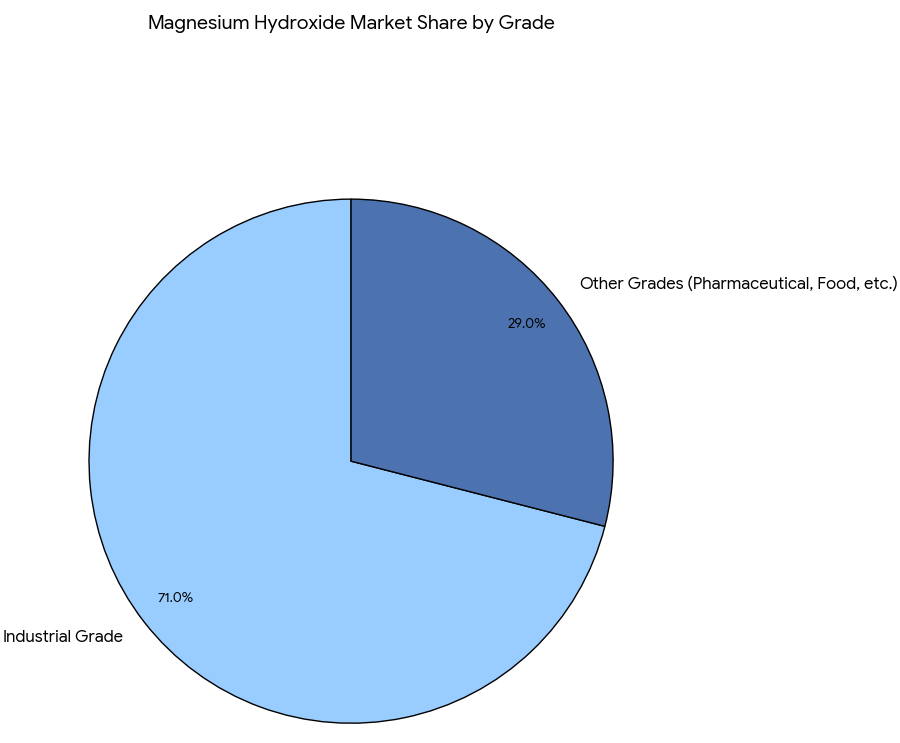
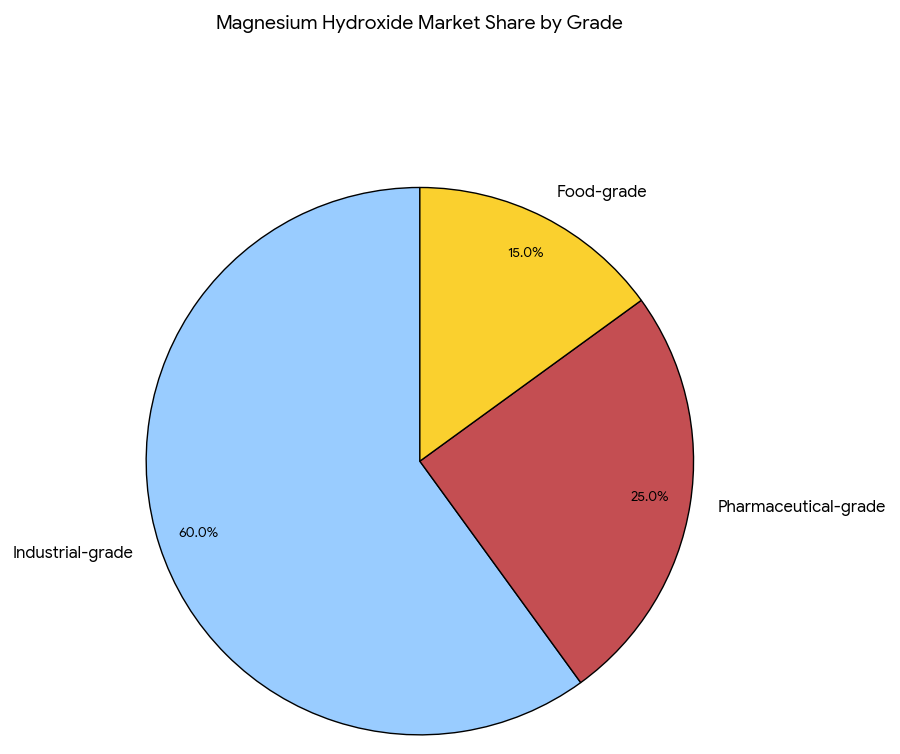
The market is segmented by grade: industrial-grade (60%), pharmaceutical-grade (25%), and food-grade (15%). The industrial-grade segment dominates due to the use of magnesium hydroxide in water treatment, flame retardants, and environmentally safe materials. Pharmaceutical-grade magnesium hydroxide is seeing growth due to increasing demand for natural antacids and laxatives. The food-grade segment remains smaller but is growing steadily as organic food additives are increasingly used for food preservation and safe consumption. Sodium hydroxide-based alternatives will remain a competitor in the water treatment segment, but magnesium hydroxide’s performance benefits are increasingly preferred.
Geography Analysis
The North America and Europe regions will lead in market share, accounting for 60% of the global demand for magnesium hydroxide, driven by stringent environmental standards and a growing pharmaceutical industry. Asia-Pacific, particularly China and India, is expected to experience the highest growth in the market, driven by industrialization, urbanization, and increasing demand for magnesium hydroxide in wastewater treatment and healthcare products. Latin America and Africa are emerging markets for pharmaceutical and industrial applications, though their share will remain limited in comparison to more developed regions.
Competitive Landscape
The key players in the magnesium hydroxide market include Albemarle Corporation, Nutrien Ltd., Magnesium Elektron, Ineos Group, and Omya. Albemarle Corporation leads in industrial-grade magnesium hydroxide, particularly for flame retardants and water treatment applications. Nutrien Ltd. and Magnesium Elektron are key suppliers of pharmaceutical-grade products, particularly for antacids and laxatives. Omya is expanding its food-grade magnesium hydroxide supply to meet growing demand in food preservation. Local producers in Asia-Pacific are gaining market share due to cost advantages and the growing demand for bio-based alternatives.
Report Details
Proceed To Buy
Want a More Customized Experience?
- Request a Customized Transcript: Submit your own questions or specify changes. We’ll conduct a new call with the industry expert, covering both the original and your additional questions. You’ll receive an updated report for a small fee over the standard price.
- Request a Direct Call with the Expert: If you prefer a live conversation, we can facilitate a call between you and the expert. After the call, you’ll get the full recording, a verbatim transcript, and continued platform access to query the content and more.
68 Circular Road, #02-01 049422, Singapore
Revenue Tower, Scbd, Jakarta 12190, Indonesia
4th Floor, Pinnacle Business Park, Andheri East, Mumbai, 400093
Cinnabar Hills, Embassy Golf Links Business Park, Bengaluru, Karnataka 560071
Request Custom Transcript
Related Transcripts


68 Circular Road, #02-01 049422, Singapore
Revenue Tower, Scbd, No.52-53, Jakarta 12190, Indonesia
Cinnabar Hills, Embassy Golf Links Business Park, Bengaluru, Karnataka 560071
4th Floor, Pinnacle Business Park, Andheri East, Mumbai, 400093


68 Circular Road, #02-01 049422, Singapore
Revenue Tower, Scbd, Jakarta 12190, Indonesia
4th Floor, Pinnacle Business Park, Andheri East, Mumbai, 400093
Cinnabar Hills, Embassy Golf Links Business Park, Bengaluru, Karnataka 560071