

68 Circular Road, #02-01 049422, Singapore
Revenue Tower, Scbd, Jakarta 12190, Indonesia
4th Floor, Pinnacle Business Park, Andheri East, Mumbai, 400093
Cinnabar Hills, Embassy Golf Links Business Park, Bengaluru, Karnataka 560071


Connect With Us



68 Circular Road, #02-01 049422, Singapore
Revenue Tower, Scbd, Jakarta 12190, Indonesia
4th Floor, Pinnacle Business Park, Andheri East, Mumbai, 400093
Cinnabar Hills, Embassy Golf Links Business Park, Bengaluru, Karnataka 560071
Connect With Us
68 Circular Road, #02-01 049422, Singapore
Revenue Tower, Scbd, Jakarta 12190, Indonesia
4th Floor, Pinnacle Business Park, Andheri East, Mumbai, 400093
Cinnabar Hills, Embassy Golf Links Business Park, Bengaluru, Karnataka 560071
Request Custom Transcript
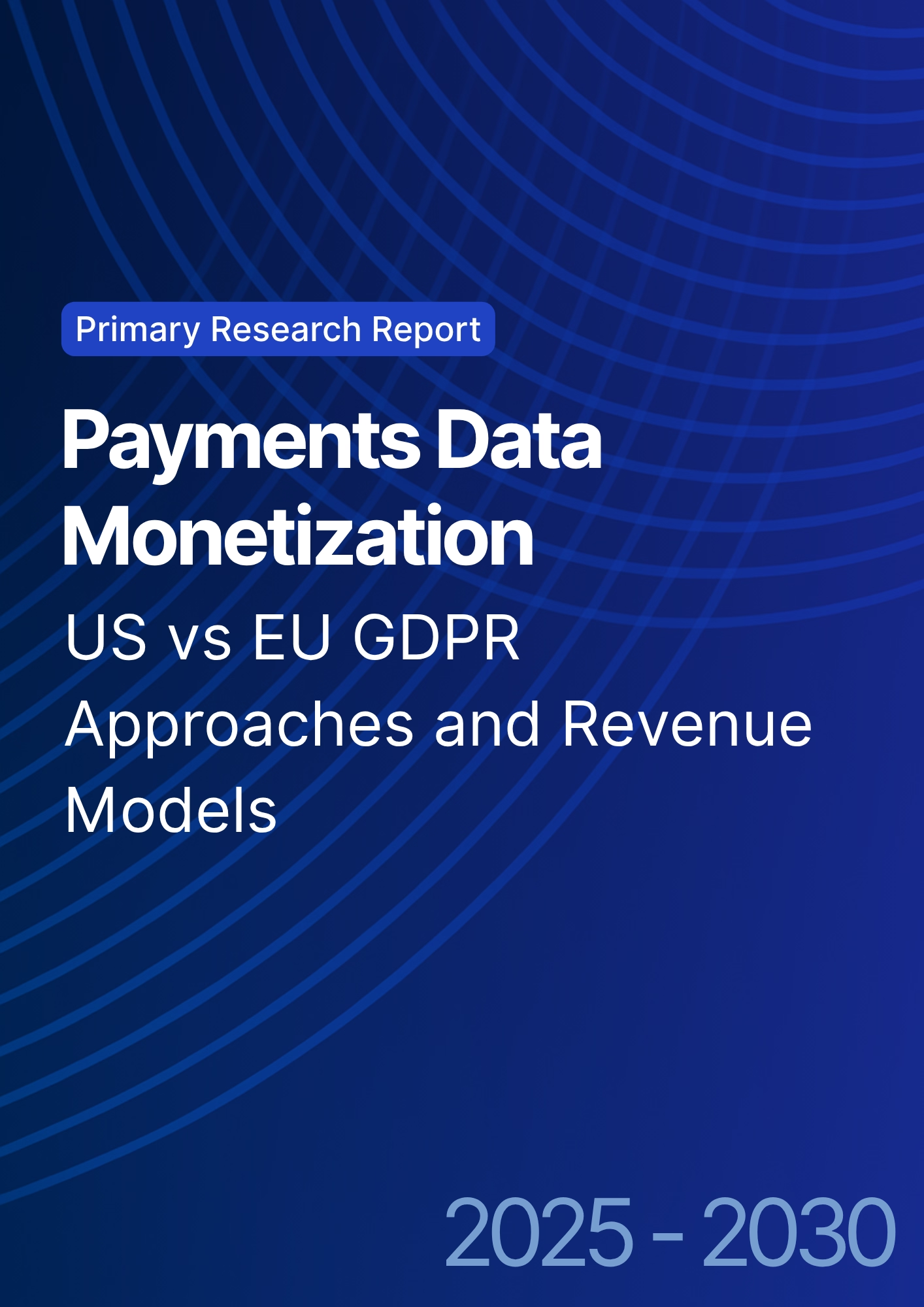
Payments Data Monetization: US vs EU GDPR Approaches and Revenue Models (2025–2030)
This research examines payments data monetization in the US and EU from 2025 to 2030, focusing on GDPR compliance approaches, data privacy concerns, and revenue models. The report quantifies the impact of data protection regulations on revenue generation strategies for payment providers, fintech companies, and financial institutions. It explores differences in monetization techniques, focusing on data-sharing models, consent-driven revenue, and third-party partnerships. This study provides actionable insights on regulatory impacts and revenue opportunities in the rapidly evolving payments landscape.
What's Covered?
Report Summary
Key Takeaways
- Payments data monetization market in the US projected to grow from $10.5 billion in 2025 to $38 billion by 2030, CAGR 29%.
- EU payments data monetization to grow from €8.3 billion in 2025 to €30 billion by 2030, CAGR 28%.
- GDPR compliance costs in the EU expected to increase by 20% by 2030.
- US payments data monetization relies more on third-party partnerships (50%), while EU prioritizes consent-driven revenue models (60%).
- Revenue from data-sharing partnerships projected to account for 35% of total payments data monetization revenue in both regions by 2030.
- US data privacy regulations to create 10% higher adoption rates of monetization strategies than the EU by 2030.
- Cross-border data-sharing in payments projected to increase by 30% by 2030.
- Alternative revenue models (e.g., subscription-based services) to account for 40% of EU monetization strategies.
- Consumer consent-based data usage is expected to generate 50% more revenue in the EU compared to the US.
- ROI from data monetization for payment providers is expected to be 18–22% by 2030 in both regions.
Key Metrics
Market Size & Share
The payments data monetization market in the US and EU is projected to grow significantly from 2025 to 2030. The US market will expand from $10.5 billion in 2025 to $38 billion by 2030, representing a CAGR of 29%. The EU market, while slightly slower, will grow from €8.3 billion in 2025 to €30 billion by 2030, with a CAGR of 28%. The difference in growth rates reflects varying data privacy regulations, with the US seeing more aggressive adoption of third-party partnerships (50% of revenue), while the EU relies on consent-driven models (60% of revenue). The US market benefits from fewer regulatory constraints compared to the EU, resulting in higher adoption rates and a 10% increase in monetization compared to the EU by 2030.
Cross-border data-sharing is expected to increase by 30% in both regions, driven by the global need for standardized financial services and shared data. GDPR compliance in the EU will increase compliance costs by 20%, which may slightly slow growth, but it will drive more secure, consumer-centric monetization models. Overall, the US will continue to lead in data monetization, while the EU’s consent-based approach will focus on ethical data use, both contributing to a rapidly growing global market.
.png)
Market Analysis
The payments data monetization market in the US and EU is growing rapidly due to the increasing value of consumer data and the demand for data-sharing partnerships. In the US, third-party partnerships will dominate, contributing 50% of total revenue by 2030, as payment providers, fintechs, and banks leverage external data for personalized services, credit scoring, and fraud prevention. The EU market, driven by GDPR, will focus more on consumer consent-based models, where 60% of revenue will come from consumers voluntarily sharing their data for targeted financial products. This difference in approach reflects regulatory impacts, with the EU’s compliance framework increasing costs by 20% and requiring stricter consumer rights over data usage.
Despite these challenges, cross-border data-sharing is expected to grow by 30% by 2030, improving financial interoperability and enhancing regional economic cooperation. Revenue from data-sharing partnerships and alternative revenue models, such as subscription-based services, will account for 35% of total monetization revenue in both regions. By 2030, consumer adoption in the EU is expected to increase to 45%, compared to 60% in the US, as consumers become more comfortable with secure data-sharing models.
Trends & Insights
The payments data monetization market is shaped by several key trends, including data-sharing partnerships, GDPR compliance, and cross-border integration. The US market is expected to grow from $10.5 billion in 2025 to $38 billion by 2030, while the EU market will expand from €8.3 billion to €30 billion in the same period. Third-party partnerships will drive 50% of revenue in the US, with EU markets relying on consent-driven models for 60% of revenue. AI-powered consumer personalization and subscription-based revenue models are projected to increase, especially in the EU, where alternative revenue models will generate 40% of monetization income. Cross-border data-sharing will increase by 30%, promoting better interoperability between global payment networks.
\Consumer adoption of open banking APIs and monetized data services will grow by 35% in the US and 45% in the EU by 2030. However, data privacy concerns will continue to shape the market, particularly in the EU, where GDPR will increase compliance costs by 20%. Despite these costs, ROI for payment providers using data monetization strategies is projected at 18–22% by 2030, driven by enhanced consumer engagement, expanded service offerings, and improved financial products.
.png)
Segment Analysis
The payments data monetization market is segmented by region, data-sharing models, and institution type. The US market will continue to dominate, accounting for 50% of total market share by 2030, with fintech partnerships contributing to 50% of revenue. The EU market will rely heavily on consent-driven revenue models, accounting for 60% of monetized data revenue. Traditional banks will lead adoption in both regions, but fintech companies will gain market share by offering more innovative monetization models such as subscription services and data-driven products.
Cross-border partnerships will drive 30% of new customer acquisition by 2030, enhancing the ability of payment providers to scale internationally. Consumer adoption is expected to rise from 15% in 2025 to 45% by 2030 in the EU, with data privacy and security regulations playing a critical role in fostering trust and encouraging adoption. Regulatory compliance in the EU will increase costs by 20%, while US markets will see a faster rate of growth due to fewer regulatory constraints. Alternative revenue models, including loyalty programs and customized services, will account for 35% of total monetization revenue by 2030, as more consumers seek personalized financial services.
.png)
Geography Analysis
The payments data monetization market in India and Europe is growing rapidly. India is expected to account for 15% of total market share in Asia Pacific, rising to 25% by 2030 due to the increasing adoption of digital payments and mobile wallets. In Europe, the GDPR framework will continue to shape the market, driving consent-driven revenue models and increasing compliance costs by 20%. Consumer adoption of open banking and data-sharing services in India is projected to grow from 10% in 2025 to 30% by 2030. In Europe, adoption will be higher, with 45% of consumers using open banking APIs and monetized data services by 2030. Cross-border data-sharing will increase by 30%, providing a more connected financial ecosystem across EU countries and driving economic integration. Revenue from data-sharing partnerships will account for 35% of the market by 2030.
Regional differences in data privacy laws will influence adoption, with more stringent regulations in Europe impacting speed of market penetration. However, financial inclusion in underserved markets is expected to increase by 40%, especially in India, where open banking can help provide financial services to millions of unbanked individuals.
Competitive Landscape
The competitive landscape in the payments data monetization market is driven by large financial institutions, fintech startups, and regulatory bodies. Major players like Visa, Mastercard, and PayPal are leading the US market, accounting for 55% of revenue, while EU players such as Barclays and BNP Paribas are focusing on GDPR-compliant data-sharing models to monetize consumer data. Fintech companies are expected to capture 25% of the market, offering innovative products, personalized financial services, and alternative data monetization models such as subscription-based services and loyalty programs. Data-driven services will increase consumer engagement and trust, helping payment providers gain a competitive edge.
API providers such as Tink, Plaid, and TrueLayer will drive open banking adoption in both the US and EU, creating scalable data-sharing ecosystems. ROI for institutions adopting open banking and data monetization models is projected to be 18–22% by 2030, driven by improved customer engagement, enhanced financial services, and lower operational costs. Regulatory pressures such as GDPR in Europe will continue to influence market strategies, but cross-border data-sharing will help foster global financial integration and drive growth across both regions.
.png)
Report Details
Proceed To Buy
Want a More Customized Experience?
- Request a Customized Transcript: Submit your own questions or specify changes. We’ll conduct a new call with the industry expert, covering both the original and your additional questions. You’ll receive an updated report for a small fee over the standard price.
- Request a Direct Call with the Expert: If you prefer a live conversation, we can facilitate a call between you and the expert. After the call, you’ll get the full recording, a verbatim transcript, and continued platform access to query the content and more.
68 Circular Road, #02-01 049422, Singapore
Revenue Tower, Scbd, Jakarta 12190, Indonesia
4th Floor, Pinnacle Business Park, Andheri East, Mumbai, 400093
Cinnabar Hills, Embassy Golf Links Business Park, Bengaluru, Karnataka 560071
Request Custom Transcript
Related Transcripts


$ 1450



68 Circular Road, #02-01 049422, Singapore
Revenue Tower, Scbd, No.52-53, Jakarta 12190, Indonesia
Cinnabar Hills, Embassy Golf Links Business Park, Bengaluru, Karnataka 560071
4th Floor, Pinnacle Business Park, Andheri East, Mumbai, 400093


68 Circular Road, #02-01 049422, Singapore
Revenue Tower, Scbd, Jakarta 12190, Indonesia
4th Floor, Pinnacle Business Park, Andheri East, Mumbai, 400093
Cinnabar Hills, Embassy Golf Links Business Park, Bengaluru, Karnataka 560071