

68 Circular Road, #02-01 049422, Singapore
Revenue Tower, Scbd, Jakarta 12190, Indonesia
4th Floor, Pinnacle Business Park, Andheri East, Mumbai, 400093
Cinnabar Hills, Embassy Golf Links Business Park, Bengaluru, Karnataka 560071


Connect With Us



68 Circular Road, #02-01 049422, Singapore
Revenue Tower, Scbd, Jakarta 12190, Indonesia
4th Floor, Pinnacle Business Park, Andheri East, Mumbai, 400093
Cinnabar Hills, Embassy Golf Links Business Park, Bengaluru, Karnataka 560071
Connect With Us
68 Circular Road, #02-01 049422, Singapore
Revenue Tower, Scbd, Jakarta 12190, Indonesia
4th Floor, Pinnacle Business Park, Andheri East, Mumbai, 400093
Cinnabar Hills, Embassy Golf Links Business Park, Bengaluru, Karnataka 560071
Request Custom Transcript
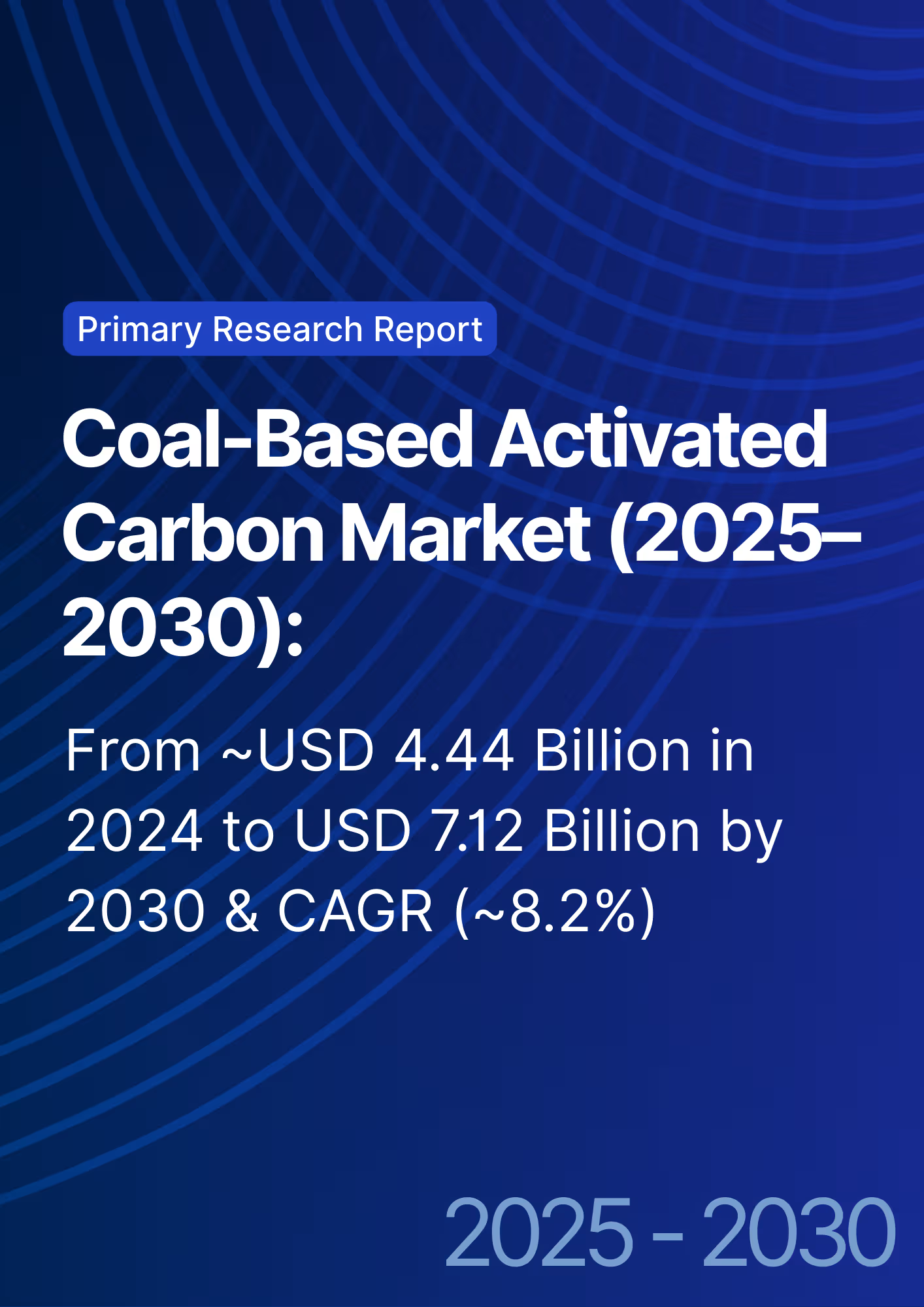
Coal-Based Activated Carbon Market (2025–2030): From ~USD 4.44 Billion in 2024 to USD 7.12 Billion by 2030 & CAGR (~8.2%) | Water Purification, Air Filtration, Industrial Processing, Mercury Removal
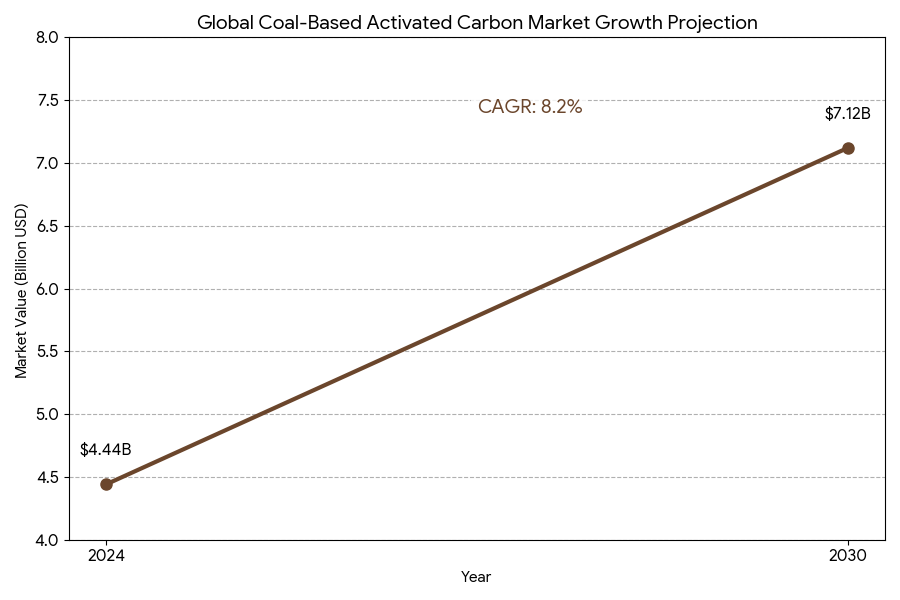
The global coal-based activated carbon market is expected to grow from USD 4.44 billion in 2024 to USD 7.12 billion by 2030, at an 8.2% CAGR. This growth is largely driven by increasing demand for water purification, air filtration, and industrial processing applications. The need for mercury removal in coal-fired power plants and other industrial processes is also a key driver for market expansion. Coal-based activated carbon is widely used in industries requiring high adsorption capacity for volatile organic compounds (VOCs), mercury, and toxic chemicals. The market is supported by stringent environmental regulations, increasing urbanization, and industrial activity, as well as rising awareness about clean water and air quality. Additionally, the market is benefiting from advances in carbon regeneration technologies, improving the economics and sustainability of using coal-based activated carbon in various sectors.
What's Covered?
Report Summary
Key Takeaways
- Market to grow from USD 4.44B (2024) to USD 7.12B (2030) at 8.2% CAGR.
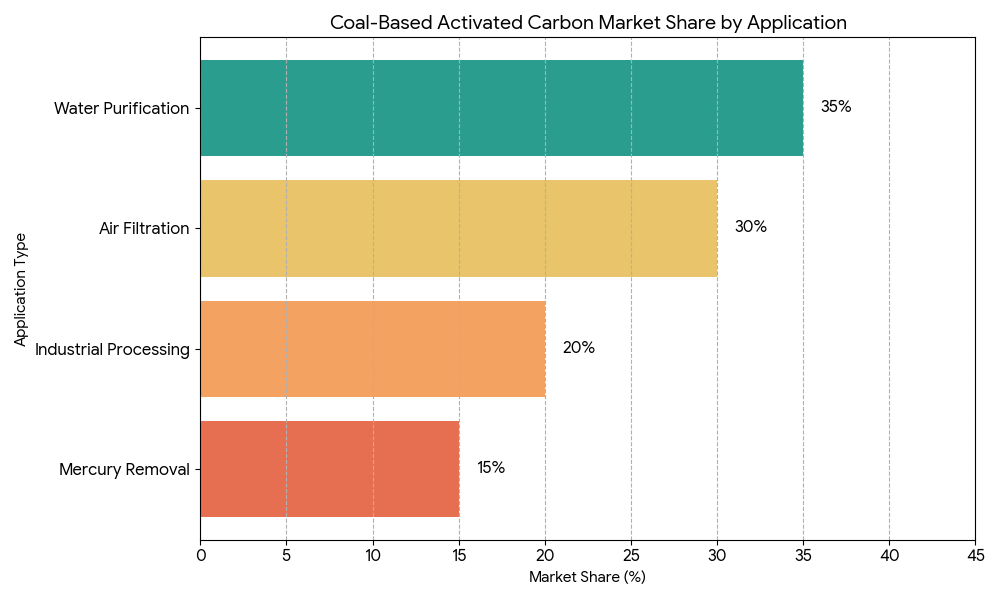
- Water purification applications will dominate, accounting for 35% of market demand.
- Air filtration segment to see steady growth, contributing 30% of market share.
- Industrial processing will represent 20% of market share by 2030.
- Mercury removal demand to account for 15% of the market by 2030.
- Asia-Pacific to grow at 9% CAGR, driven by rapid industrialization and urbanization in countries like China and India.
- North America to hold 30% market share, led by environmental regulations and industrial applications.
- Regeneration technologies to reduce costs and promote sustainability, contributing to 5% CAGR in demand.
- Coal-based activated carbon remains cost-effective compared to other forms of activated carbon.
- Technological innovations in carbon activation and mercury removal will continue to boost demand.
Key Metrics
Market Size & Share
The coal-based activated carbon market is set to grow from USD 4.44 billion in 2024 to USD 7.12 billion by 2030, with the water purification segment leading demand at 35% of total market consumption. Air filtration applications are expected to account for 30%, driven by stringent environmental regulations and growing concerns over indoor and outdoor air quality. The industrial processing segment will make up 20% of market demand, particularly driven by oil refineries, chemicals, and pharmaceutical industries. Mercury removal will contribute to 15% of the market share, driven by the need for cleaner emissions from coal-powered plants.

Market Analysis
The coal-based activated carbon market is witnessing sustained growth, particularly in water treatment and air purification applications. The water purification sector is expanding due to increasing demand for clean drinking water and industrial water treatment. The air filtration market is driven by urbanization and stricter environmental regulations aimed at improving indoor air quality. Industrial applications are growing due to the increasing need for mercury removal, chemical filtration, and oil & gas processing. The growth in industrial processing and growing urbanization in Asia-Pacific is significantly boosting the demand for coal-based activated carbon.
Trends & Insights
- Environmental Regulations: The market is increasingly influenced by strict environmental regulations concerning air quality and water purity.
- Sustainability: A growing demand for eco-friendly, sustainable carbon products is driving innovations in regeneration technologies.
- Coal Power Plants: Mercury removal continues to be a major driver for demand in coal-fired power plants.
- Industrial Expansion: Rapid industrialization in Asia-Pacific is pushing the need for industrial-grade activated carbon.
- Water Treatment: Water purification continues to account for the largest share in the market as urban water quality issues persist.
- Indoor Air Filtration: The adoption of activated carbon in HVAC systems and air purifiers is rising due to health-conscious consumers.
- Advanced Filtration Systems: Activated carbon in filtering systems is improving performance and cost-efficiency.
- Technological Advancements: Carbon regeneration technology is improving cost-effectiveness and contributing to sustainability goals.
- Carbon Footprint Reduction: Companies are focusing on sustainable production practices, including the use of bio-based carbon materials.
- Recycling Initiatives: Increased use of recycled activated carbon as part of circular economy practices.
Segment Analysis
The market is segmented by application type: water purification (35%), air filtration (30%), industrial processing (20%), and mercury removal (15%). The water purification segment will continue to be the largest, driven by municipal and industrial water treatment requirements. The air filtration segment is expected to grow rapidly due to the increasing concerns over pollution and indoor air quality. The industrial processing sector will remain significant, with oil & gas, chemical manufacturing, and automotive sectors as the primary consumers. Mercury removal will experience sustained demand from coal-fired power plants and other industrial sources.
Geography Analysis
North America and Europe will continue to dominate the market, accounting for 50% of the market share due to stringent environmental regulations and high demand for air filtration and water treatment solutions. Asia-Pacific, especially China and India, will experience the highest growth due to industrialization, urbanization, and increased focus on water and air quality. Latin America and Africa will remain smaller markets but are expected to grow steadily as local regulations on air and water quality improve.
Competitive Landscape
Key players in the coal-based activated carbon market include Calgon Carbon, Cabot Corporation, Kuraray, Jacobi Carbons, and Xinyi Chemical. Calgon Carbon is the market leader, offering a broad range of products for water treatment and air filtration. Cabot Corporation focuses on innovations in mercury removal and sustainability. Jacobi Carbons is known for its industrial-grade activated carbon, while Kuraray offers high-performance solutions in air and water filtration. Regional players are focusing on improving local manufacturing and regeneration capabilities to cater to increasing demand for cost-effective solutions.
Report Details
Proceed To Buy
Want a More Customized Experience?
- Request a Customized Transcript: Submit your own questions or specify changes. We’ll conduct a new call with the industry expert, covering both the original and your additional questions. You’ll receive an updated report for a small fee over the standard price.
- Request a Direct Call with the Expert: If you prefer a live conversation, we can facilitate a call between you and the expert. After the call, you’ll get the full recording, a verbatim transcript, and continued platform access to query the content and more.
68 Circular Road, #02-01 049422, Singapore
Revenue Tower, Scbd, Jakarta 12190, Indonesia
4th Floor, Pinnacle Business Park, Andheri East, Mumbai, 400093
Cinnabar Hills, Embassy Golf Links Business Park, Bengaluru, Karnataka 560071
Request Custom Transcript
Related Transcripts


68 Circular Road, #02-01 049422, Singapore
Revenue Tower, Scbd, No.52-53, Jakarta 12190, Indonesia
Cinnabar Hills, Embassy Golf Links Business Park, Bengaluru, Karnataka 560071
4th Floor, Pinnacle Business Park, Andheri East, Mumbai, 400093


68 Circular Road, #02-01 049422, Singapore
Revenue Tower, Scbd, Jakarta 12190, Indonesia
4th Floor, Pinnacle Business Park, Andheri East, Mumbai, 400093
Cinnabar Hills, Embassy Golf Links Business Park, Bengaluru, Karnataka 560071