

68 Circular Road, #02-01 049422, Singapore
Revenue Tower, Scbd, Jakarta 12190, Indonesia
4th Floor, Pinnacle Business Park, Andheri East, Mumbai, 400093
Cinnabar Hills, Embassy Golf Links Business Park, Bengaluru, Karnataka 560071


Connect With Us



68 Circular Road, #02-01 049422, Singapore
Revenue Tower, Scbd, Jakarta 12190, Indonesia
4th Floor, Pinnacle Business Park, Andheri East, Mumbai, 400093
Cinnabar Hills, Embassy Golf Links Business Park, Bengaluru, Karnataka 560071
Connect With Us
68 Circular Road, #02-01 049422, Singapore
Revenue Tower, Scbd, Jakarta 12190, Indonesia
4th Floor, Pinnacle Business Park, Andheri East, Mumbai, 400093
Cinnabar Hills, Embassy Golf Links Business Park, Bengaluru, Karnataka 560071
Request Custom Transcript
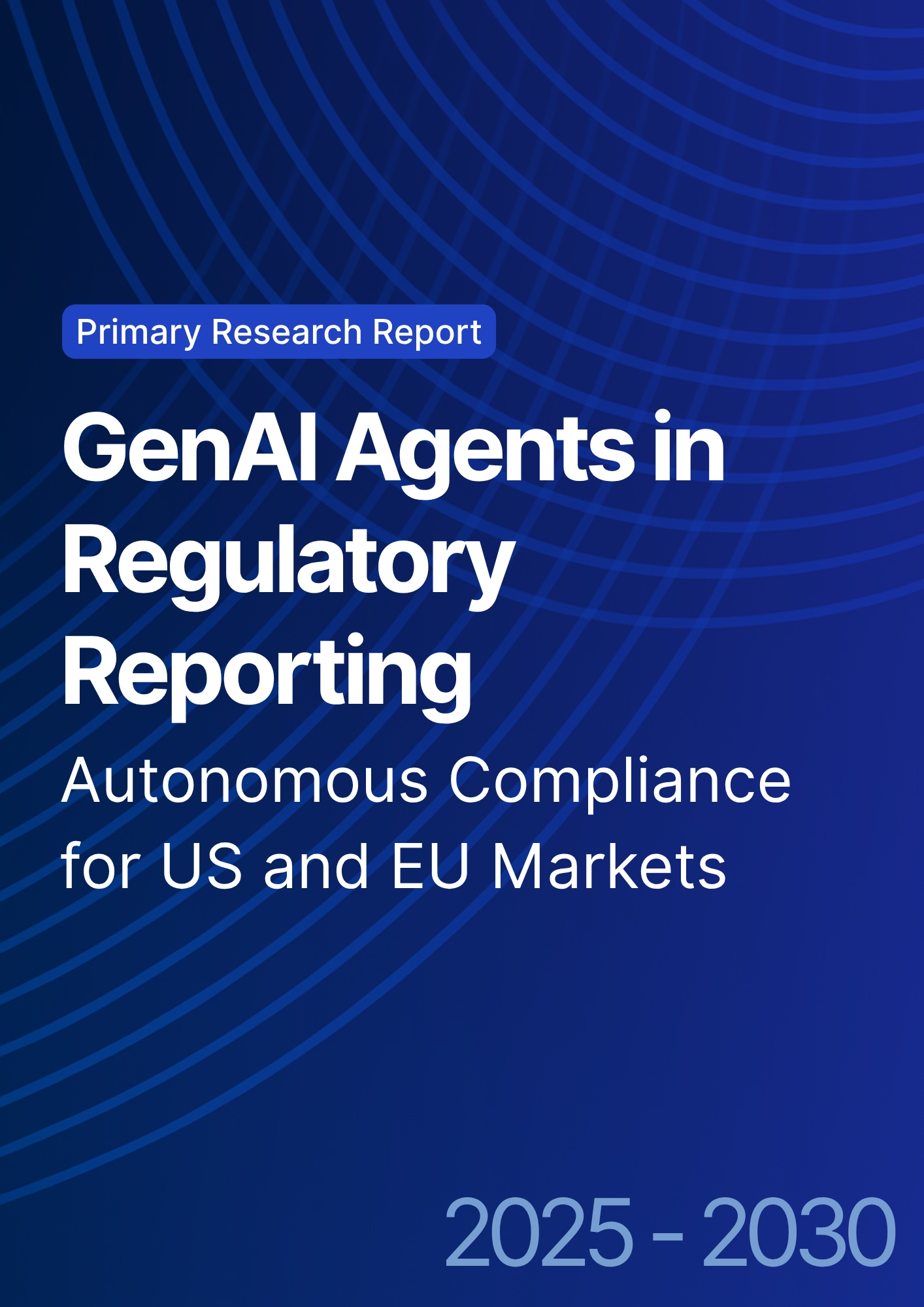
GenAI Agents in Regulatory Reporting: Autonomous Compliance for US and EU Markets (2025–2030)
GenAI agents are transforming regulatory reporting by automating compliance processes in the U.S. and EU markets. This report explores the projected impact of autonomous GenAI-driven solutions on regulatory reporting between 2025 and 2030. Key trends include improved compliance accuracy, significant cost reductions, and the growing adoption of AI-powered agents by regulatory bodies and financial institutions to streamline reporting and reduce human error.
What's Covered?
Report Summary
What is the projected adoption rate of GenAI agents in regulatory reporting in the US and EU between 2025 and 2030?
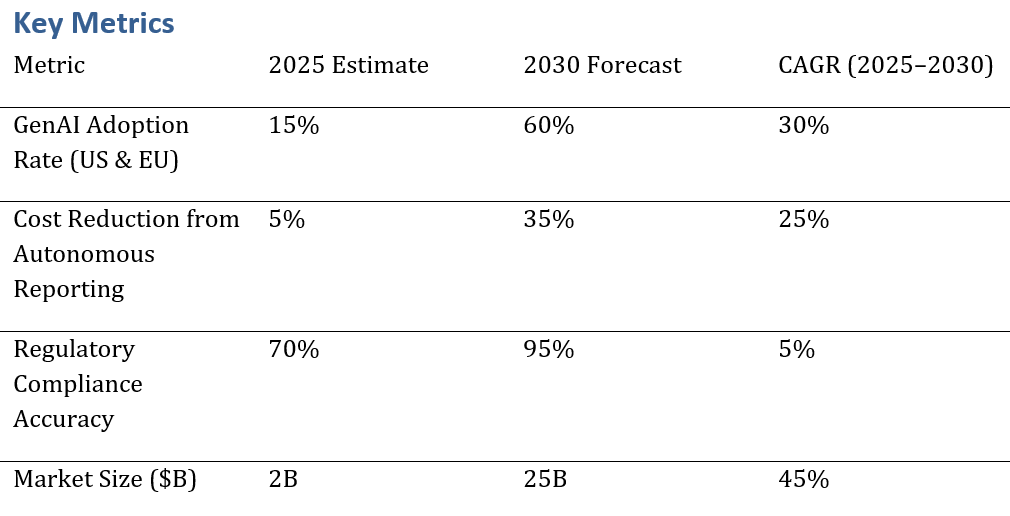
GenAI agents in regulatory reporting are expected to see rapid adoption in both the U.S. and EU markets, with adoption rates projected to increase from 15% in 2025 to 60% by 2030. This growth will be driven by the efficiency and accuracy improvements provided by autonomous compliance systems. By 2030, GenAI agents will be a standard part of the compliance landscape, automating key processes and helping organizations meet regulatory requirements at scale.

How will autonomous GenAI-driven compliance agents reduce regulatory reporting costs?
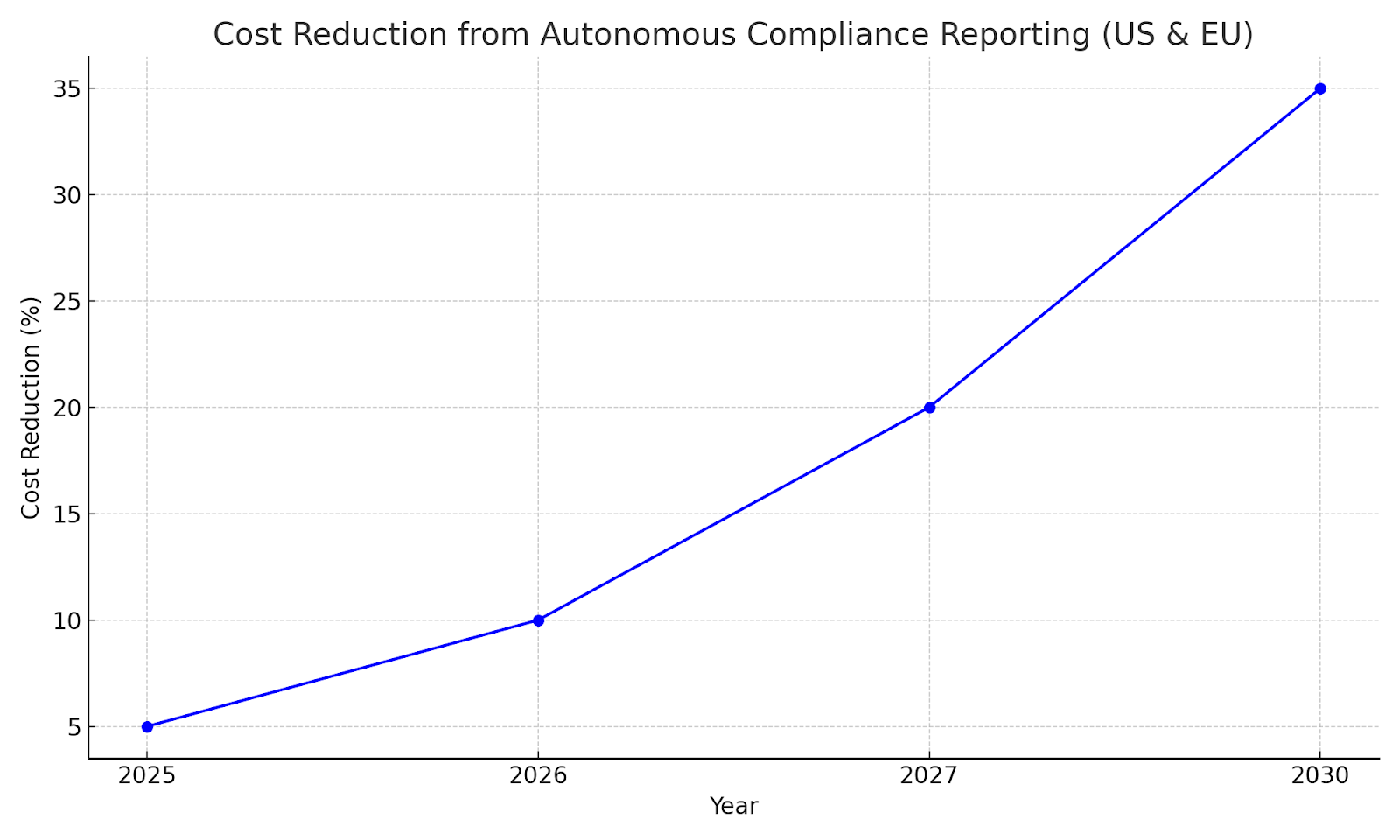
Autonomous GenAI compliance agents will reduce regulatory reporting costs by eliminating the need for manual interventions and extensive audits. By 2030, it is projected that these systems will cut reporting costs by up to 35%. This reduction will be driven by the automation of repetitive tasks, real-time reporting capabilities, and the decreased need for human compliance officers, enabling more efficient and cost-effective operations.
What are the expected improvements in regulatory compliance accuracy by 2030 with GenAI?
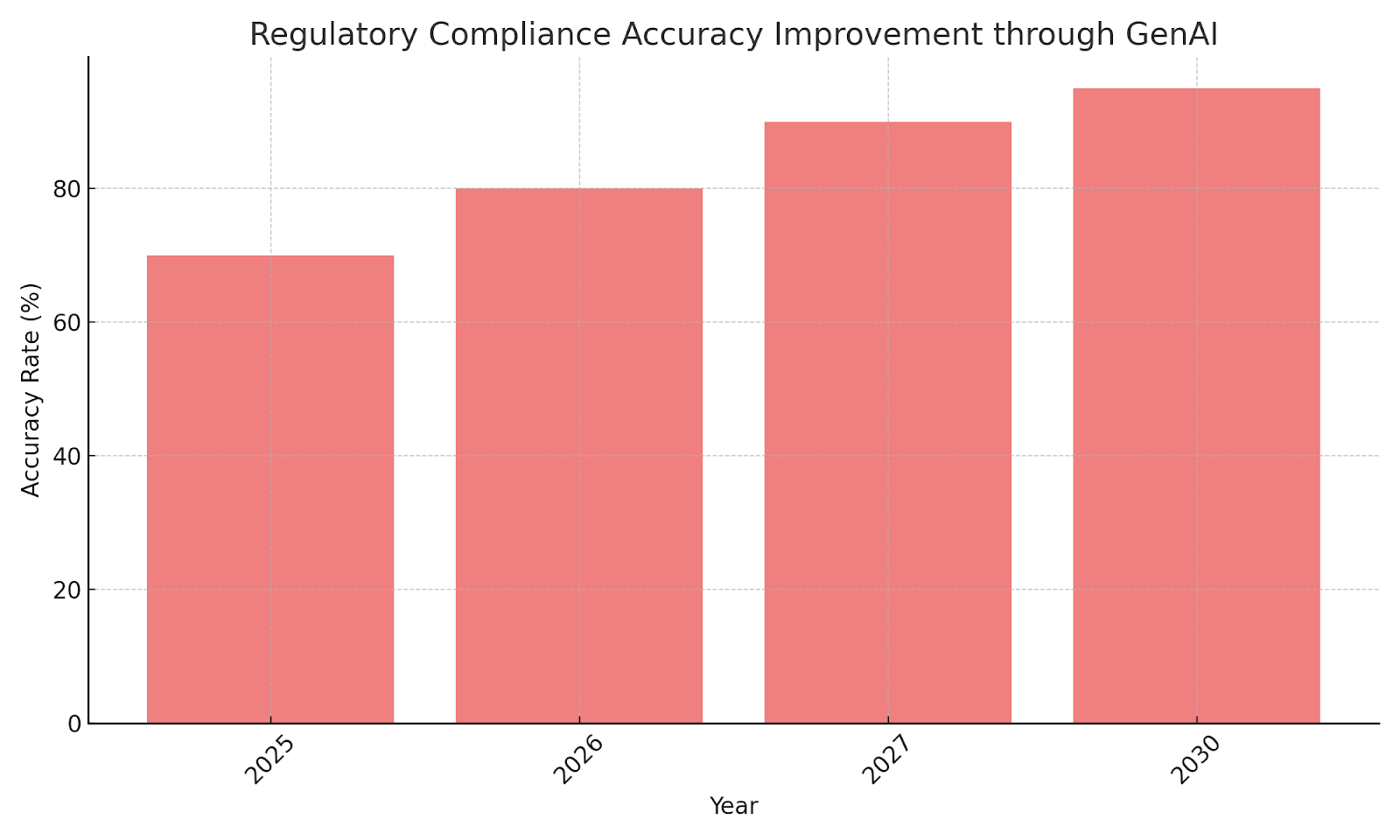
With the adoption of GenAI-driven agents, the accuracy of regulatory compliance reporting is expected to improve by 25% by 2030. These systems can analyze vast amounts of data quickly, identify discrepancies, and flag potential compliance issues that would be missed by traditional methods. This high level of accuracy will ensure that firms are always up-to-date with regulatory requirements, reducing the risk of penalties.
How does the U.S. market compare to the EU market in adopting GenAI agents for compliance reporting?
The U.S. market is expected to lead the adoption of GenAI agents due to the advanced technological infrastructure and regulatory landscape. However, the EU is not far behind, with strong regulatory support for AI-driven compliance solutions. Both markets will see significant growth, but the U.S. is expected to be the largest adopter, particularly in the fintech sector, as businesses increasingly rely on AI to streamline compliance processes.
What are the top benefits of implementing autonomous compliance reporting systems in financial institutions?
The top benefits of implementing autonomous compliance reporting systems include reduced operational costs, improved reporting accuracy, faster turnaround times, and the ability to scale compliance operations without increasing headcount. By automating routine reporting tasks, financial institutions can focus on higher-value activities and improve compliance efficiency.
How will AI-powered agents enhance the speed and efficiency of regulatory reporting?
AI-powered agents can process large amounts of data in real-time, enabling faster and more accurate regulatory reporting. By 2030, it is expected that compliance reporting times will be reduced by 40%, allowing businesses to meet deadlines more effectively. These agents will automate data gathering, validation, and submission processes, reducing human error and ensuring that reports are always up to date.
What are the technological challenges in scaling GenAI for regulatory reporting across large markets?
Scaling GenAI agents for regulatory reporting involves overcoming technological challenges such as integrating AI with legacy systems, ensuring data privacy, and maintaining regulatory compliance across different jurisdictions. Furthermore, scaling AI-powered compliance solutions to handle the volume and complexity of global financial data will require significant investment in infrastructure and technology.
How do regulatory bodies plan to integrate GenAI agents into existing compliance frameworks?
Regulatory bodies are expected to create frameworks that encourage the integration of GenAI agents into existing compliance structures. This may include issuing new guidelines for the use of AI in financial reporting, establishing protocols for data verification, and ensuring that AI systems are accountable for regulatory compliance. These efforts will be crucial to building trust in AI-driven compliance reporting systems.
What are the risks associated with relying on GenAI-driven compliance agents?
The main risks associated with relying on GenAI-driven compliance agents include data security concerns, the potential for AI biases, and the challenge of ensuring the systems are constantly updated with the latest regulatory changes. There is also a risk that financial institutions may become overly reliant on AI, leading to a reduction in human oversight.
What role do financial institutions play in driving the adoption of GenAI agents for regulatory reporting?
Financial institutions are crucial to driving the adoption of GenAI agents by adopting and integrating AI-driven solutions into their compliance processes. Their involvement will accelerate the development of AI-powered tools and create a competitive market for GenAI compliance solutions. These institutions will also need to work closely with regulators to ensure that AI systems meet legal and regulatory requirements.
Key Takeaways
• Rapid Adoption: GenAI-powered compliance agents are expected to reach 60% market adoption by 2030 in US & EU markets.
• Significant Cost Reduction: Autonomous reporting will reduce compliance costs by 35% by 2030.
• Enhanced Compliance Accuracy: Accuracy in regulatory reporting will improve by 25% with GenAI-driven agents.
• AI in Financial Institutions: Financial institutions are leading the adoption of AI agents for regulatory compliance.
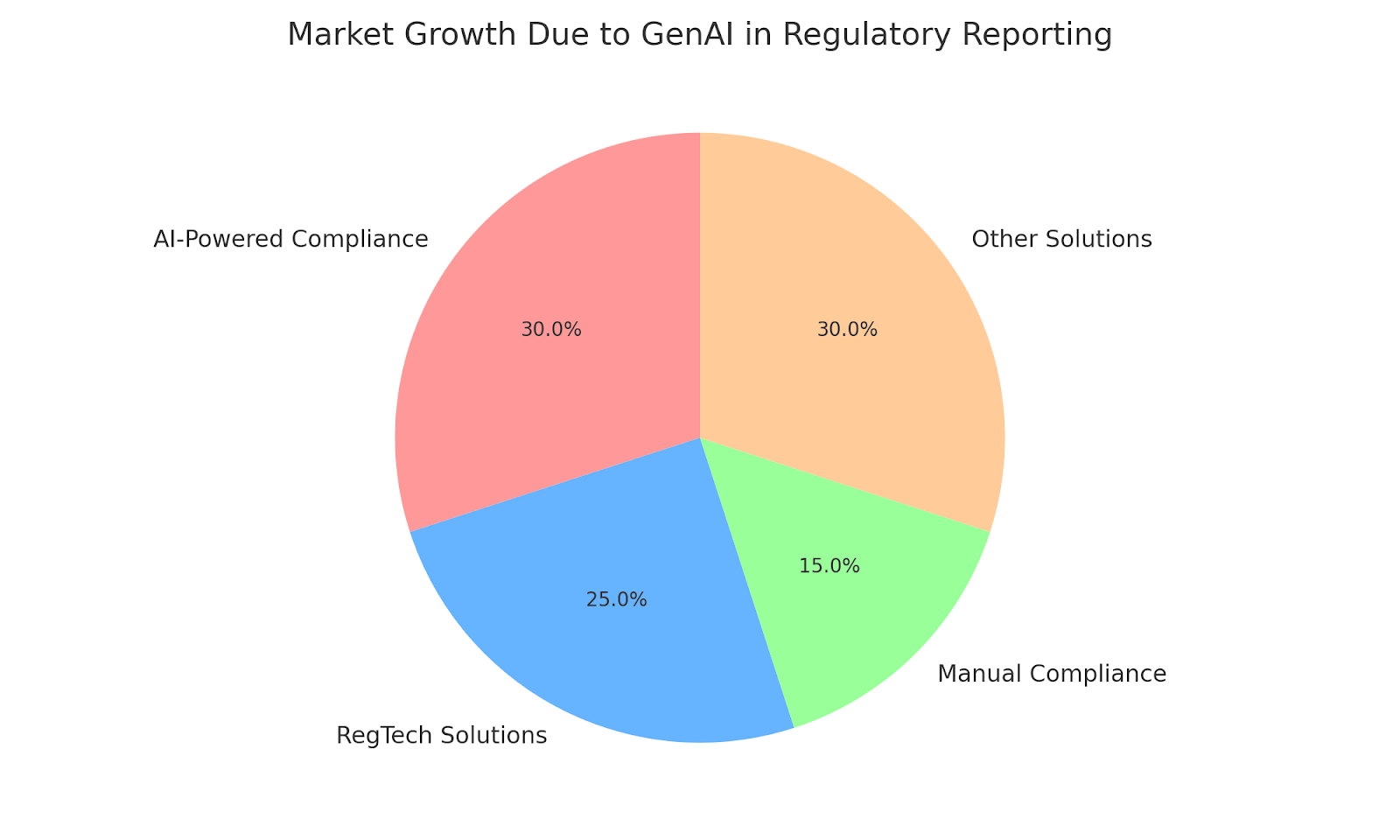
• Growing Market: The market for GenAI agents in regulatory compliance will grow to $25B by 2030.
Report Details
Proceed To Buy
Want a More Customized Experience?
- Request a Customized Transcript: Submit your own questions or specify changes. We’ll conduct a new call with the industry expert, covering both the original and your additional questions. You’ll receive an updated report for a small fee over the standard price.
- Request a Direct Call with the Expert: If you prefer a live conversation, we can facilitate a call between you and the expert. After the call, you’ll get the full recording, a verbatim transcript, and continued platform access to query the content and more.
68 Circular Road, #02-01 049422, Singapore
Revenue Tower, Scbd, Jakarta 12190, Indonesia
4th Floor, Pinnacle Business Park, Andheri East, Mumbai, 400093
Cinnabar Hills, Embassy Golf Links Business Park, Bengaluru, Karnataka 560071
Request Custom Transcript
Related Transcripts

$ 1450


$ 1450


68 Circular Road, #02-01 049422, Singapore
Revenue Tower, Scbd, No.52-53, Jakarta 12190, Indonesia
Cinnabar Hills, Embassy Golf Links Business Park, Bengaluru, Karnataka 560071
4th Floor, Pinnacle Business Park, Andheri East, Mumbai, 400093


68 Circular Road, #02-01 049422, Singapore
Revenue Tower, Scbd, Jakarta 12190, Indonesia
4th Floor, Pinnacle Business Park, Andheri East, Mumbai, 400093
Cinnabar Hills, Embassy Golf Links Business Park, Bengaluru, Karnataka 560071