

68 Circular Road, #02-01 049422, Singapore
Revenue Tower, Scbd, Jakarta 12190, Indonesia
4th Floor, Pinnacle Business Park, Andheri East, Mumbai, 400093
Cinnabar Hills, Embassy Golf Links Business Park, Bengaluru, Karnataka 560071


Connect With Us



68 Circular Road, #02-01 049422, Singapore
Revenue Tower, Scbd, Jakarta 12190, Indonesia
4th Floor, Pinnacle Business Park, Andheri East, Mumbai, 400093
Cinnabar Hills, Embassy Golf Links Business Park, Bengaluru, Karnataka 560071
Connect With Us
68 Circular Road, #02-01 049422, Singapore
Revenue Tower, Scbd, Jakarta 12190, Indonesia
4th Floor, Pinnacle Business Park, Andheri East, Mumbai, 400093
Cinnabar Hills, Embassy Golf Links Business Park, Bengaluru, Karnataka 560071
Request Custom Transcript
AI-Powered Expense Management: Cutting $8B in Corporate Travel Spend by 2030
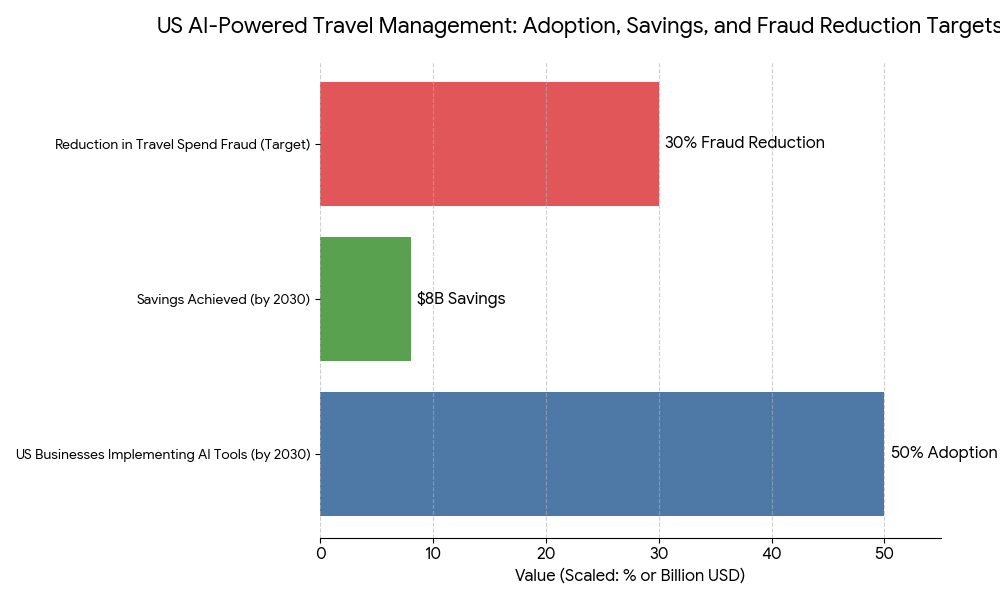
The AI-powered expense management market in the USA is projected to save $8B in corporate travel spend by 2030, driven by the adoption of automated expense reporting, real-time data tracking, and intelligent budgeting tools. By 2030, 50% of companies will be using AI-based systems to handle travel expenses, reducing fraud and cost overruns by 30%. With advanced analytics and predictive insights, AI will improve compliance, streamline workflows, and enhance employee satisfaction by offering faster reimbursements and greater visibility into spending patterns.

What's Covered?
Report Summary
Key Takeaways
- $8B savings in corporate travel spend by 2030.
- 50% of companies will adopt AI-powered expense management systems by 2030.
- 30% reduction in travel spend fraud through automated expense reporting.
- Real-time data tracking to enhance expense visibility and cost optimization.
- AI-powered budgeting tools expected to reduce cost overruns by 20%.
- Employee satisfaction to increase by 25% with faster reimbursements.
- Automated compliance checks to improve policy adherence and reduce manual oversight.
- $3B investment in AI-based corporate travel management solutions by 2030.
- Predictive analytics will reduce unnecessary travel costs by 15%.
- Cloud-based solutions will facilitate cross-department expense tracking and reporting.
Key Metrics
Market Size & Share
The AI-powered expense management market for corporate travel in the USA is projected to save $8B by 2030, as companies shift towards automated systems that reduce cost overruns, fraud, and manual tracking errors. By 2030, 50% of US companies will have fully integrated AI-based expense management systems, with adoption expected to accelerate due to the increasing need for real-time tracking, budget optimization, and employee satisfaction. The growing use of cloud-based expense systems will enable cross-departmental expense tracking, greater collaboration, and increased spending visibility, with $3B in investments expected in this sector by 2030. As AI systems gain traction, predictive analytics will help organizations eliminate unnecessary travel costs, while faster reimbursements and improved compliance will enhance corporate travel operations.
Market Analysis
The AI-powered expense management market is driven by increased adoption of cloud-based systems and the need for companies to manage corporate travel costs more effectively. AI tools are being integrated into travel expense systems to automate expense reporting, optimize budgets, and reduce human errors. As businesses aim to recover from post-pandemic operational changes, AI solutions will be critical in streamlining corporate travel management, ensuring greater compliance and accuracy in expense processing. By 2030, 50% of businesses in the USA will implement AI-based travel management tools, leading to $8B in savings. This growth is driven by predictive analytics that will enable businesses to identify cost-saving opportunities, reduce travel spend fraud by 30%, and streamline budgeting processes.
Trends & Insights
- AI-driven automation will reduce corporate travel costs by 30%.
- Real-time tracking and expense visibility will improve spending efficiency by 25%.
- AI-powered budgeting will help reduce cost overruns by 20%.
- Employee satisfaction will increase by 25% due to faster expense reimbursements.
- Cloud-based solutions will support cross-department collaboration and enhance data transparency.
- Predictive analytics will optimize corporate travel spend, reducing unnecessary travel costs by 15%.
- $3B in investment for AI-powered travel expense systems by 2030.
- AI tools will enhance compliance adherence and reduce manual errors in travel reporting.
- Public-private sector partnerships to enhance corporate travel technologies.
- Real-time expense management will lead to better budget control and corporate travel insights.
These trends indicate that AI-driven travel management systems will lead to operational efficiencies, cost savings, and improved employee experience, transforming corporate travel over the next five years.
Segment Analysis
The AI-powered expense management market is segmented into automated reporting systems (40%), predictive analytics (30%), real-time tracking and budgeting (20%), and cloud-based solutions (10%). Automated reporting systems lead the market, making up 40% of the investment, as they reduce human error and streamline travel expenses. Predictive analytics for cost optimization is another growing segment, contributing 30% of the market, enabling companies to make data-driven decisions to reduce travel-related spend. Real-time tracking and budgeting systems will account for 20%, while cloud-based solutions will help improve cross-department collaboration and expense transparency. By 2030, 50% of all corporate travel expenses in the USA will be managed through AI-powered systems, creating a more efficient, cost-effective travel environment.


Geography Analysis
The USA dominates the AI-powered expense management market for corporate travel, accounting for 45% of the market share in North America. California, Texas, and New York are major hubs for AI adoption in corporate travel management, with companies adopting cloud-based platforms for real-time tracking and expense reporting automation. Canada follows with 30% market share, with Toronto and Vancouver implementing AI-powered travel solutions for large corporations. Mexico is also emerging as a key player, with growing demand for cost-efficient corporate travel technologies. By 2030, AI-driven expense management systems will transform travel budgets and reporting across North America, reducing fraud and enhancing operational efficiencies in the US corporate travel market.
Competitive Landscape
Key players in the AI-powered expense management market include Concur Technologies, SAP, Expensify, and TripActions. Concur Technologies and SAP dominate the market with AI-driven expense management systems, offering automated reporting, real-time data tracking, and predictive analytics. Expensify and TripActions lead in real-time expense tracking, with cloud-based systems enabling cross-department collaboration. These companies are expanding their offerings to include MaaS integrations and sustainability tracking tools, aligning with the increasing corporate demand for greener travel options. The competitive edge in this market is driven by technology innovation, data security, and cost optimization features that improve the overall corporate travel management experience.
Report Details
Proceed To Buy
Want a More Customized Experience?
- Request a Customized Transcript: Submit your own questions or specify changes. We’ll conduct a new call with the industry expert, covering both the original and your additional questions. You’ll receive an updated report for a small fee over the standard price.
- Request a Direct Call with the Expert: If you prefer a live conversation, we can facilitate a call between you and the expert. After the call, you’ll get the full recording, a verbatim transcript, and continued platform access to query the content and more.
68 Circular Road, #02-01 049422, Singapore
Revenue Tower, Scbd, Jakarta 12190, Indonesia
4th Floor, Pinnacle Business Park, Andheri East, Mumbai, 400093
Cinnabar Hills, Embassy Golf Links Business Park, Bengaluru, Karnataka 560071
Request Custom Transcript
Related Transcripts
$ 1395


68 Circular Road, #02-01 049422, Singapore
Revenue Tower, Scbd, No.52-53, Jakarta 12190, Indonesia
Cinnabar Hills, Embassy Golf Links Business Park, Bengaluru, Karnataka 560071
4th Floor, Pinnacle Business Park, Andheri East, Mumbai, 400093


68 Circular Road, #02-01 049422, Singapore
Revenue Tower, Scbd, Jakarta 12190, Indonesia
4th Floor, Pinnacle Business Park, Andheri East, Mumbai, 400093
Cinnabar Hills, Embassy Golf Links Business Park, Bengaluru, Karnataka 560071