

68 Circular Road, #02-01 049422, Singapore
Revenue Tower, Scbd, Jakarta 12190, Indonesia
4th Floor, Pinnacle Business Park, Andheri East, Mumbai, 400093
Cinnabar Hills, Embassy Golf Links Business Park, Bengaluru, Karnataka 560071


Connect With Us



68 Circular Road, #02-01 049422, Singapore
Revenue Tower, Scbd, Jakarta 12190, Indonesia
4th Floor, Pinnacle Business Park, Andheri East, Mumbai, 400093
Cinnabar Hills, Embassy Golf Links Business Park, Bengaluru, Karnataka 560071
Connect With Us
68 Circular Road, #02-01 049422, Singapore
Revenue Tower, Scbd, Jakarta 12190, Indonesia
4th Floor, Pinnacle Business Park, Andheri East, Mumbai, 400093
Cinnabar Hills, Embassy Golf Links Business Park, Bengaluru, Karnataka 560071
Request Custom Transcript
Tokenization of Real-World Assets: Commercial Real Estate, Private Debt & Art in US/EU Markets (2025–2030)
This research explores the tokenization of real-world assets—including commercial real estate, private debt, and art—in US and EU markets from 2025 to 2030. The report examines how blockchain-based tokenization will transform asset liquidity, democratize access to traditionally illiquid markets, and enhance transparency and security. It provides insights into the expected market growth, regulatory challenges, and investment opportunities in these asset classes, highlighting the financial implications and ROI for institutional investors and asset managers adopting tokenization solutions.
What's Covered?
Report Summary
Key Takeaways
- Tokenized real-world assets market projected to grow from $3 billion in 2025 to $30 billion by 2030, CAGR 62%.
- Tokenization of commercial real estate will account for 45% of the market by 2030, generating $13.5 billion in market value.
- Private debt tokenization is expected to capture 25% of the market by 2030, worth approximately $7.5 billion.
- Art tokenization in the US/EU markets projected to grow to $2 billion by 2030, driven by demand for fractional ownership.
- Liquidity in tokenized assets expected to improve by 40% compared to traditional ownership models.
- Institutional adoption of tokenized assets will account for 60% of market share by 2030.
- Blockchain transparency will increase asset traceability by 50%, reducing fraud and improving investor confidence.
- Cross-border tokenized asset transactions are expected to grow by 35% by 2030, driven by regulatory clarity.
- Regulatory frameworks around tokenized assets will mature, with EU and US markets reaching 70% compliance by 2030.
- ROI from tokenization adoption in asset classes is expected to be 18-22% by 2030, driven by enhanced asset liquidity, transparency, and cost savings.
Key Metrics
Market Size & Share
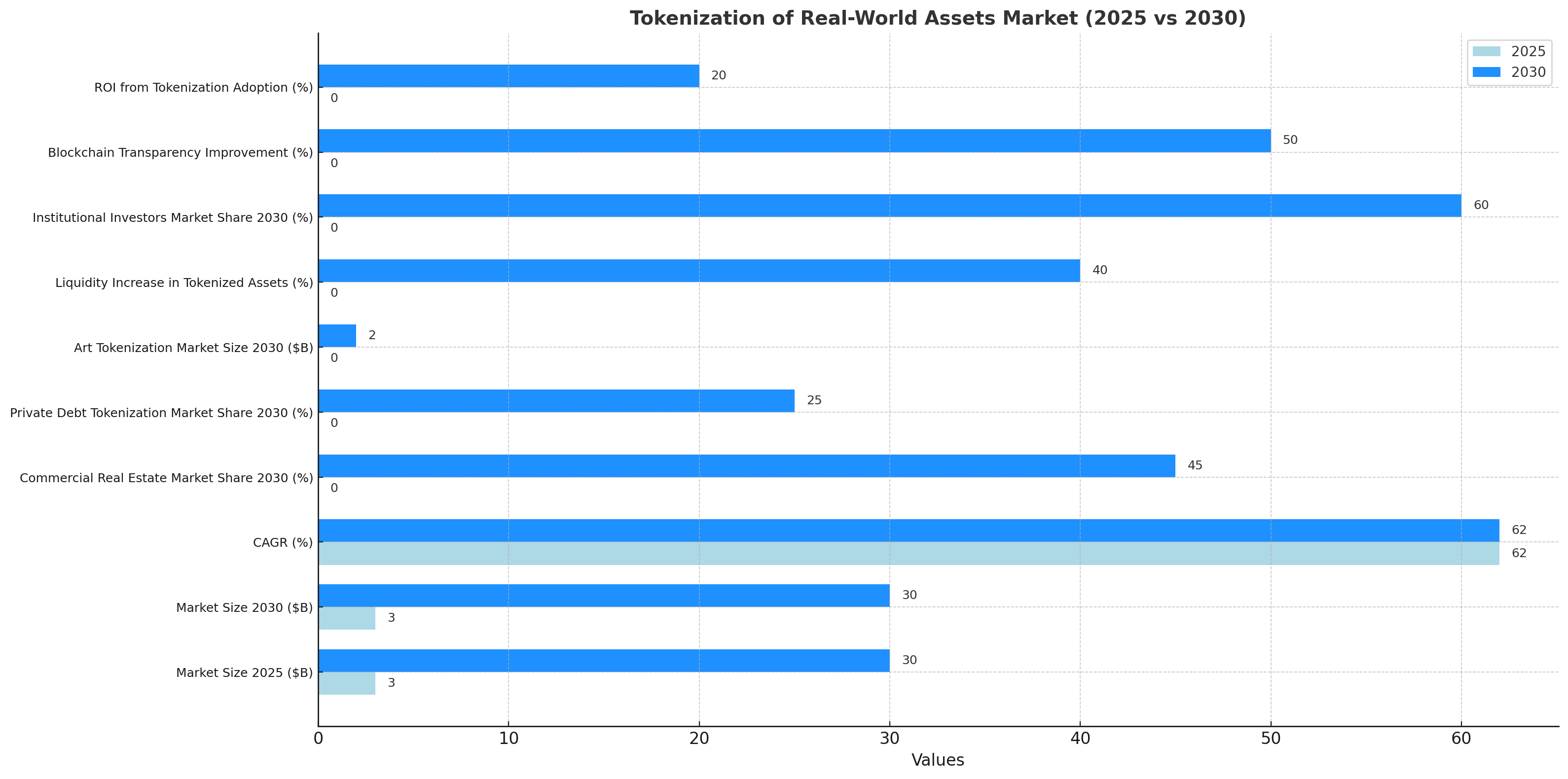
The tokenization of real-world assets market is expected to grow from $3 billion in 2025 to $30 billion by 2030, reflecting a CAGR of 62%. By 2030, the commercial real estate segment will account for 45% of the market, generating $13.5 billion in market value, driven by the demand for fractional ownership and increased asset liquidity. Private debt tokenization will represent 25% of the market, valued at $7.5 billion, as investors seek more accessible ways to invest in private equity and debt instruments. The art tokenization market is projected to grow to $2 billion by 2030, enabling fractional ownership and opening the art market to a broader pool of investors. The liquidity in tokenized assets is expected to increase by 40%, as blockchain solutions enable faster transactions, enhanced security, and more efficient ownership transfer. Institutional investors will account for 60% of market share by 2030, adopting tokenization platforms to enhance diversification, risk mitigation, and capital accessibility. Blockchain transparency will drive 50% improvement in asset traceability, reducing the risk of fraud and ensuring greater regulatory compliance. By 2030, the ROI from tokenization adoption is expected to be 18–22%, driven by cost savings, greater efficiency, and the ability to tap into new revenue streams.
Market Analysis
The market for tokenizing real-world assets is projected to expand rapidly from $3 billion in 2025 to $30 billion by 2030, driven by growing demand for digital asset solutions across commercial real estate, private debt, and art markets. Commercial real estate will contribute 45% of the market share, representing a market size of $13.5 billion by 2030, driven by the increasing need for fractional ownership and liquidity. Private debt tokenization will account for 25% of the market by 2030, estimated at $7.5 billion, as investors increasingly adopt tokenized platforms for accessing private debt instruments. Art tokenization will contribute to the market’s growth, reaching $2 billion by 2030 as blockchain technology allows for fractional ownership and broader investor participation. The adoption of tokenization will enhance liquidity by 40%, making it easier for investors to buy, sell, and trade previously illiquid assets. Financial institutions will lead adoption, accounting for 60% of the market share by 2030, leveraging tokenization platforms to improve asset management and investor access. As regulatory frameworks mature, the market will become more compliant and secure, with asset traceability increasing by 50% due to the use of blockchain technology. ROI from tokenization is expected to be 18–22%, driven by increased efficiency, cost savings, and enhanced market access.
Trends & Insights
The tokenization of real-world assets in US and EU markets is growing rapidly, with the market projected to expand from $3 billion in 2025 to $30 billion by 2030, reflecting a CAGR of 62%. Key trends driving this growth include the rise of AI-powered blockchain solutions that provide greater liquidity for traditionally illiquid assets such as commercial real estate, private debt, and art. By 2030, commercial real estate tokenization will represent 45% of the market, valued at $13.5 billion, as more investors seek to access fractional ownership opportunities. Private debt tokenization will grow to $7.5 billion, capturing 25% of the market by 2030, driven by institutional demand for more accessible investments in private equity. The art tokenization market will be valued at $2 billion by 2030, driven by the ability for investors to own fractional shares in high-value art pieces. Liquidity is expected to improve by 40%, as tokenization platforms enable faster, more efficient trading of these assets. Financial institutions will be the primary adopters, accounting for 60% of the market share. Blockchain transparency will enhance asset traceability by 50%, improving security and investor confidence. ROI from tokenization adoption is projected to be 18–22% by 2030.
Segment Analysis
The tokenized real-world assets market in North America is segmented into commercial real estate, private debt, and art tokenization, with each segment expected to see significant growth by 2030. Commercial real estate will account for 45% of market share, generating $13.5 billion as fractional ownership and increased asset liquidity drive adoption. Private debt tokenization will represent 25% of the market, valued at $7.5 billion, as tokenization platforms provide easier access to private equity and debt instruments. Art tokenization will contribute $2 billion by 2030, allowing investors to purchase fractional ownership of high-value art, opening the market to a broader investor base. Liquidity in tokenized assets is expected to improve by 40% by 2030, enabling faster and more secure transactions. Financial institutions will lead adoption, with 60% of market share expected to be driven by banks and asset managers seeking greater liquidity and diversification. Cross-border tokenized transactions will increase by 35%, driven by the development of standardized compliance frameworks and secure blockchain solutions. ROI from adopting tokenization is projected to be 18–22% by 2030, driven by cost savings, increased efficiency, and the ability to tap into previously inaccessible asset classes.
Geography Analysis
The tokenization of real-world assets in North America and Europe is set to grow from $3 billion in 2025 to $30 billion by 2030, with commercial real estate representing 45% of the market, valued at $13.5 billion. The private debt tokenization segment will account for 25% of the market, worth approximately $7.5 billion by 2030, as financial institutions seek better access to private debt markets. The art tokenization market will reach $2 billion by 2030, driven by the demand for fractional ownership and global art investment opportunities. Liquidity in these tokenized assets is expected to improve by 40%, with faster transaction processing and asset trading becoming the norm. Cross-border tokenization will improve by 35%, as blockchain technologies enable more seamless global transactions. By 2030, institutional adoption will account for 60% of the market share, as financial institutions and investment firms incorporate tokenized assets into their portfolios. Asset traceability will increase by 50%, improving security, reducing fraud risks, and boosting investor confidence. ROI from tokenization adoption is projected at 18–22% by 2030, driven by improved efficiency, cost reductions, and better access to alternative investments.
Competitive Landscape
The tokenized real-world assets market in North America and Europe is competitive, with key players such as Polymath, Securitize, and Tokeny Solutions providing blockchain-based tokenization platforms. These companies will dominate the market by offering AI-powered, secure tokenization solutions for real estate, private debt, and art. Financial institutions and asset managers will be the primary adopters, accounting for 60% of market share by 2030. Fractional ownership of commercial real estate, private debt, and art will drive the adoption of tokenization, as these assets are traditionally illiquid. Liquidity will improve by 40% as tokenized assets enable faster, more efficient trading. The cross-border tokenization of assets is expected to grow by 35%, as blockchain technologies facilitate global compliance and secure transactions. ROI for investors adopting tokenization solutions is expected to be 18–22% by 2030, driven by cost savings, improved market access, and increased asset liquidity. Partnerships between financial institutions, technology providers, and regulators will shape the competitive landscape, fostering further growth in the tokenized assets market by 2030.
Report Details
Proceed To Buy
Want a More Customized Experience?
- Request a Customized Transcript: Submit your own questions or specify changes. We’ll conduct a new call with the industry expert, covering both the original and your additional questions. You’ll receive an updated report for a small fee over the standard price.
- Request a Direct Call with the Expert: If you prefer a live conversation, we can facilitate a call between you and the expert. After the call, you’ll get the full recording, a verbatim transcript, and continued platform access to query the content and more.
68 Circular Road, #02-01 049422, Singapore
Revenue Tower, Scbd, Jakarta 12190, Indonesia
4th Floor, Pinnacle Business Park, Andheri East, Mumbai, 400093
Cinnabar Hills, Embassy Golf Links Business Park, Bengaluru, Karnataka 560071
Request Custom Transcript
Related Transcripts


$ 1450



68 Circular Road, #02-01 049422, Singapore
Revenue Tower, Scbd, No.52-53, Jakarta 12190, Indonesia
Cinnabar Hills, Embassy Golf Links Business Park, Bengaluru, Karnataka 560071
4th Floor, Pinnacle Business Park, Andheri East, Mumbai, 400093


68 Circular Road, #02-01 049422, Singapore
Revenue Tower, Scbd, Jakarta 12190, Indonesia
4th Floor, Pinnacle Business Park, Andheri East, Mumbai, 400093
Cinnabar Hills, Embassy Golf Links Business Park, Bengaluru, Karnataka 560071