

68 Circular Road, #02-01 049422, Singapore
Revenue Tower, Scbd, Jakarta 12190, Indonesia
4th Floor, Pinnacle Business Park, Andheri East, Mumbai, 400093
Cinnabar Hills, Embassy Golf Links Business Park, Bengaluru, Karnataka 560071


Connect With Us



68 Circular Road, #02-01 049422, Singapore
Revenue Tower, Scbd, Jakarta 12190, Indonesia
4th Floor, Pinnacle Business Park, Andheri East, Mumbai, 400093
Cinnabar Hills, Embassy Golf Links Business Park, Bengaluru, Karnataka 560071
Connect With Us
68 Circular Road, #02-01 049422, Singapore
Revenue Tower, Scbd, Jakarta 12190, Indonesia
4th Floor, Pinnacle Business Park, Andheri East, Mumbai, 400093
Cinnabar Hills, Embassy Golf Links Business Park, Bengaluru, Karnataka 560071
Request Custom Transcript
Asia-Pacific Calcium Hypochlorite Market (2025–2030): From ~USD 776.5 Million in 2024 to ~USD 1.15 Billion by 2030 & CAGR (~7.6%) | Water Treatment, Disinfection, Sanitation, Bleaching
The Asia-Pacific calcium hypochlorite market is set to grow from USD 776.5 million in 2024 to USD 1.15 billion by 2030, at a CAGR of 7.6%. This growth is primarily driven by increasing demand for calcium hypochlorite in water treatment, disinfection, and sanitation applications across the region. The compound is widely used for swimming pool disinfection, drinking water purification, and industrial waste treatment. The demand for calcium hypochlorite in bleaching agents for textiles and paper manufacturing is also expected to grow. The expanding population, rising industrialization, and increasing public awareness of sanitation and hygiene are major drivers of growth. Government initiatives to improve clean water access and sanitation infrastructure in developing countries like India, China, and Indonesia are expected to provide a significant boost to the market.

What's Covered?
Report Summary
Key Takeaways
- Market to grow from USD 776.5M (2024) to USD 1.15B (2030) at 7.6% CAGR.
- Water treatment applications will lead demand, accounting for 50% of the total market.
- Disinfection and sanitation use will represent 25% of market share by 2030.
- Bleaching applications in textile and paper industries projected to grow at 8% CAGR.
- India and China will account for 60% of market demand by 2030.
- Swimming pool sanitation is a key driver, growing at 9% CAGR.
- Government initiatives to boost clean water access in developing nations will significantly impact market growth.
- Bio-based calcium hypochlorite formulations are gaining popularity due to environmental regulations.
- China is projected to dominate production, with a 40% market share by 2030.
- Sustainability-driven trends will increase demand for low-environmental-impact disinfection products.
Key Metrics
Market Size & Share
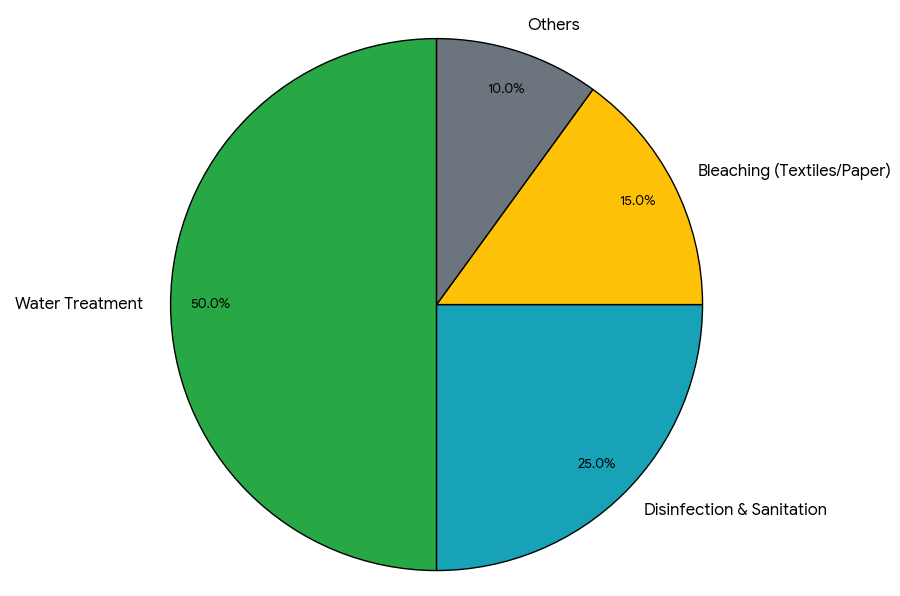
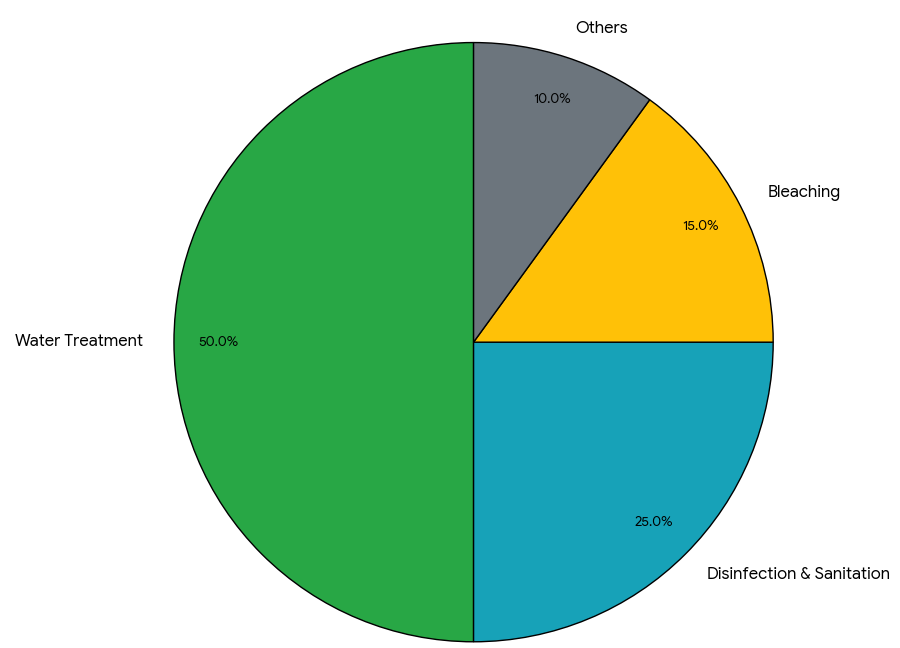
The Asia-Pacific calcium hypochlorite market will grow from USD 776.5 million in 2024 to USD 1.15 billion by 2030. Water treatment will remain the largest segment, contributing 50% of the market share by 2030, driven by rising industrialization and water purification needs. Disinfection and sanitation applications will make up 25% of demand, while bleaching for textiles and paper will contribute 15%. The bio-based calcium hypochlorite segment will see increasing demand as environmental regulations favor eco-friendly solutions. India and China will drive 60% of the market growth due to government investments in sanitation and clean water initiatives.

Market Analysis
The growing demand for calcium hypochlorite in Asia-Pacific is largely driven by the region’s expanding industrial base and the increasing importance of water treatment and disinfection solutions. Water treatment remains the largest segment, with calcium hypochlorite used in public water supplies to maintain cleanliness and purity. The disinfection segment is growing due to increasing sanitation standards and swimming pool requirements. The bleaching market is supported by the continued demand for whitening agents in textile and paper industries, and industrial cleaning. In addition, bio-based alternatives and environmentally friendly formulations are expected to play a significant role as demand for sustainable solutions increases.
Trends & Insights
- Water Treatment Growth: Rising water contamination and industrial pollution in Asia-Pacific will continue to push demand for calcium hypochlorite in water treatment.
- Sanitation and Hygiene: Increasing emphasis on hygiene and sanitation in developing countries will spur growth in disinfection applications.
- Sustainability: Bio-based calcium hypochlorite formulations will grow due to rising environmental concerns and regulations.
- Textile and Paper Industries: Increased demand for bleaching and whitening agents in textiles and paper manufacturing.
- Swimming Pools: Pool sanitation in highly urbanized regions driving significant growth in the disinfection segment.
- Green Chemistry: The push for eco-friendly chemicals will influence the formulation of calcium hypochlorite products.
- Regulatory Influence: Governments in India, China, and Indonesia are boosting sanitation infrastructure, positively impacting demand for calcium hypochlorite.
- Technological Advancements: Innovations in production will lower costs and improve the efficiency of calcium hypochlorite.
- Rising Consumer Awareness: Growing knowledge of the importance of sanitation will drive demand for disinfectants.
- Healthcare Expansion: Growth in healthcare and hospital sanitization is expected to increase demand for disinfection solutions.
Segment Analysis
The market is segmented by application into water treatment (50%), disinfection & sanitation (25%), and bleaching (15%). Water treatment remains the largest segment, driven by the growing need for clean drinking water and industrial water purification. The disinfection & sanitation segment, which includes hospital disinfectants, swimming pool sanitation, and public sanitation, is growing rapidly, particularly in developing regions. The bleaching segment, used in textiles, paper, and cleaning products, will continue to see steady demand. Bio-based calcium hypochlorite solutions are expected to capture 15% of market share by 2030.
Geography Analysis
India and China are leading the Asia-Pacific calcium hypochlorite market, accounting for 60% of demand by 2030 due to strong government initiatives focusing on clean water access, sanitation, and industrial growth. Southeast Asia and East Asia, particularly Indonesia and Japan, will also contribute significantly to the market’s expansion. The Middle East, particularly Saudi Arabia, is increasing demand due to growing infrastructure projects and industrial applications. Australia is expected to see slower growth, driven by stable demand from municipal water treatment plants and pool sanitation.
Competitive Landscape
Key players in the calcium hypochlorite market include Solvay, Aditya Birla Chemicals, Nankai Chemical, Henan Huaxing Chemical, and OxyChem. Solvay and Aditya Birla Chemicals are leaders in the water treatment and disinfection segments, with strong production facilities in China and India. Henan Huaxing Chemical and Nankai Chemical are focusing on bio-based production methods and expanding their presence in southeast Asia. OxyChem is expanding its capacity to meet growing industrial demand in East Asia. Regional players are targeting local production and distribution networks to meet the increasing demand for sustainable and cost-effective products.
Report Details
Proceed To Buy
Want a More Customized Experience?
- Request a Customized Transcript: Submit your own questions or specify changes. We’ll conduct a new call with the industry expert, covering both the original and your additional questions. You’ll receive an updated report for a small fee over the standard price.
- Request a Direct Call with the Expert: If you prefer a live conversation, we can facilitate a call between you and the expert. After the call, you’ll get the full recording, a verbatim transcript, and continued platform access to query the content and more.
68 Circular Road, #02-01 049422, Singapore
Revenue Tower, Scbd, Jakarta 12190, Indonesia
4th Floor, Pinnacle Business Park, Andheri East, Mumbai, 400093
Cinnabar Hills, Embassy Golf Links Business Park, Bengaluru, Karnataka 560071
Request Custom Transcript
Related Transcripts

68 Circular Road, #02-01 049422, Singapore
Revenue Tower, Scbd, No.52-53, Jakarta 12190, Indonesia
Cinnabar Hills, Embassy Golf Links Business Park, Bengaluru, Karnataka 560071
4th Floor, Pinnacle Business Park, Andheri East, Mumbai, 400093


68 Circular Road, #02-01 049422, Singapore
Revenue Tower, Scbd, Jakarta 12190, Indonesia
4th Floor, Pinnacle Business Park, Andheri East, Mumbai, 400093
Cinnabar Hills, Embassy Golf Links Business Park, Bengaluru, Karnataka 560071