

68 Circular Road, #02-01 049422, Singapore
Revenue Tower, Scbd, Jakarta 12190, Indonesia
4th Floor, Pinnacle Business Park, Andheri East, Mumbai, 400093
Cinnabar Hills, Embassy Golf Links Business Park, Bengaluru, Karnataka 560071


Connect With Us



68 Circular Road, #02-01 049422, Singapore
Revenue Tower, Scbd, Jakarta 12190, Indonesia
4th Floor, Pinnacle Business Park, Andheri East, Mumbai, 400093
Cinnabar Hills, Embassy Golf Links Business Park, Bengaluru, Karnataka 560071
Connect With Us
68 Circular Road, #02-01 049422, Singapore
Revenue Tower, Scbd, Jakarta 12190, Indonesia
4th Floor, Pinnacle Business Park, Andheri East, Mumbai, 400093
Cinnabar Hills, Embassy Golf Links Business Park, Bengaluru, Karnataka 560071
Request Custom Transcript
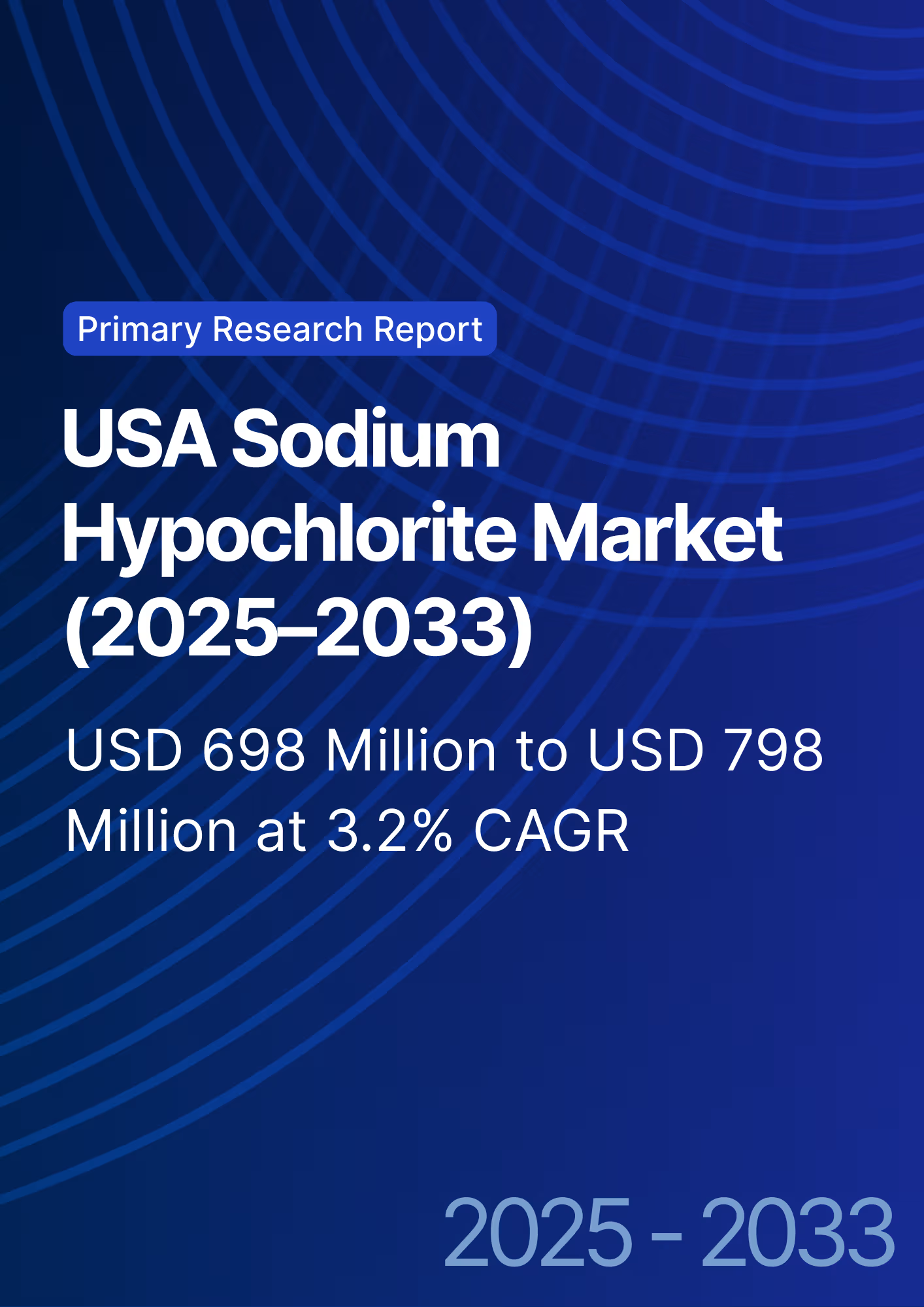
USA Sodium Hypochlorite Market (2025–2033): USD 698 Million to USD 798 Million at 3.2% CAGR | Water Treatment & Disinfection Drive Steady Growth
The USA sodium hypochlorite market is projected to grow from USD 698 million in 2025 to USD 798 million by 2033, registering a CAGR of 3.2%. This growth is primarily driven by the rising demand for water treatment and disinfection applications in municipal, industrial, and household sectors. As regulatory standards tighten, particularly for drinking water disinfection, and with a greater focus on environmental safety, the sodium hypochlorite market is benefiting from the shift towards more sustainable water treatment methods. The demand for liquid bleach in cleaning products, food safety, and agriculture also supports steady market expansion.
What's Covered?
Report Summary
Key Takeaways
- Market to expand from USD 698M (2025) to USD 798M (2033) at 3.2% CAGR.
- Water treatment and disinfection to drive 58% of total market demand by 2033.
- Municipal water treatment to account for 45% of sodium hypochlorite usage.
- Food safety and agriculture applications projected to grow 15% annually.
- Industrial use in pulp & paper and textiles contributes 22% of demand.
- Sodium hypochlorite’s environmental safety enhancing its adoption in eco-conscious sectors.
- U.S. EPA and NSF regulations to increase sodium hypochlorite use for potable water.
- Household bleach market expected to capture USD 120M in annual revenue.
- Northwest and Northeast regions to lead market demand, driven by municipal needs.
- Green chemistry innovations improving sodium hypochlorite’s sustainability footprint.
Key Metrics
Market Size & Share
The sodium hypochlorite market in the U.S. will grow from USD 698 million in 2025 to USD 798 million by 2033, driven primarily by water treatment and disinfection applications. Municipal water treatment will account for 45% of total market consumption, while industrial demand from sectors like pulp & paper, textiles, and food safety contributes another 22%. Household bleach will capture USD 120 million annually by 2030 as the cleaning products sector continues to rely on sodium hypochlorite for its disinfection properties.
Market Analysis
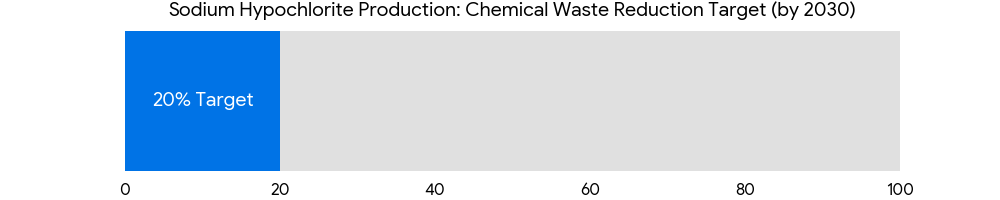
The growing demand for sodium hypochlorite is tied directly to the increasing need for effective disinfection solutions in industrial, municipal, and household applications. Sodium hypochlorite is widely used in municipal water treatment to meet increasingly stringent drinking water regulations. As part of sustainability goals, U.S. cities are shifting to green disinfection practices, reducing chlorine-based byproducts while improving efficiency. Additionally, household usage of sodium hypochlorite is projected to grow due to increasing health awareness and cleaning habits. With an expected reduction in chemical waste by 20% by 2030, manufacturers are exploring greener production methods.
Trends & Insights
- Water Treatment Regulation: Stricter EPA compliance increasing the usage of sodium hypochlorite.
- Green Chemistry: Manufacturers investing in sustainable production to meet eco-certifications.
- Household Adoption Growth: Increased demand for bleach-based cleaning and laundry solutions.
- Food Safety Demand: Food and beverage sector using sodium hypochlorite to maintain sanitization standards.
- Low-cost Disinfection: Sodium hypochlorite remains a low-cost solution compared to alternatives.
- Commercial Growth: Increasing sodium hypochlorite use in swimming pools, water parks, and pest control.
- Efficient Production Technologies: Use of membrane electrolysis for better purity and energy efficiency.
- Pulp & Paper Industry: Growing demand for sodium hypochlorite as a bleaching agent.
- Water Desalination and Wastewater Treatment driving commercial sodium hypochlorite adoption.
- Sustainability in Production: Green production processes reducing emissions and waste.
Segment Analysis
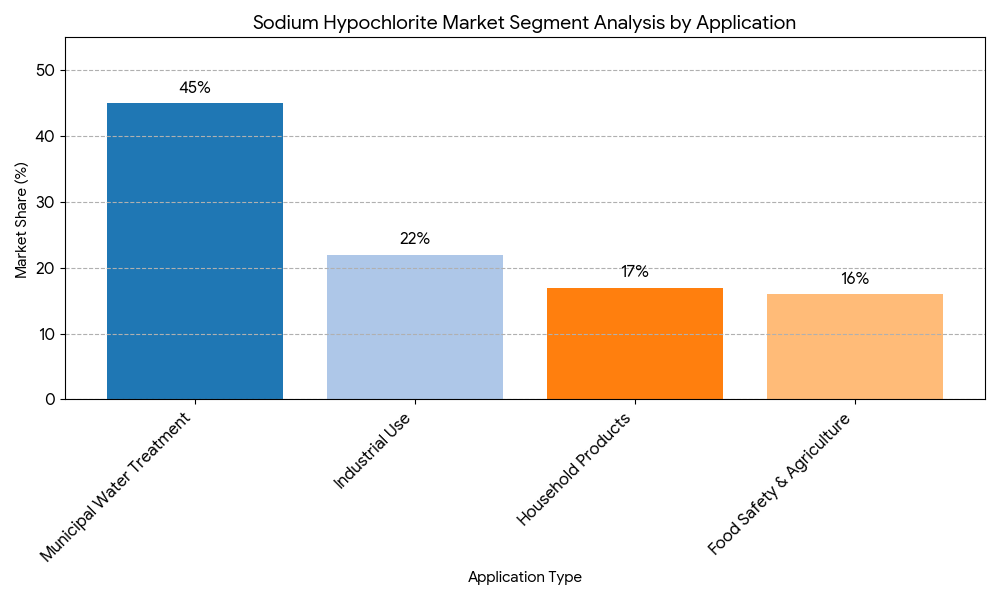
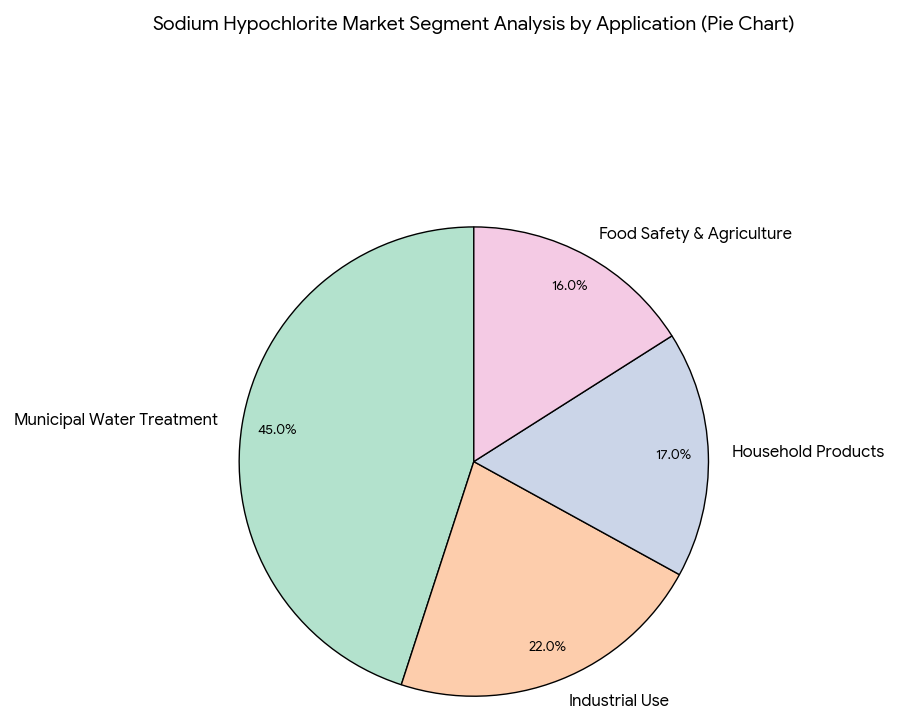
The market segments by application: municipal water treatment (45%), industrial use (22%), household products (17%), and food safety & agriculture (16%). The municipal sector leads due to growing water purification mandates, especially in rural and suburban areas. Industrial applications, including textile and paper bleaching, make up a significant portion of the demand. Food safety regulations, especially in meat processing and dairy, contribute to the growing need for sodium hypochlorite. Household products are poised to increase with the growing trend in health-conscious cleaning. The market is increasingly looking to integrate sustainable, low-VOC production methods to cater to regulatory pressures and the evolving consumer demand for safer cleaning products.
Geography Analysis
The Northeast and Northwest U.S. regions are seeing the highest demand for sodium hypochlorite, driven by large-scale municipal water treatment projects. California and Texas lead industrial consumption, given their manufacturing hubs in pulp and paper, chemicals, and textiles. The Southeast sees rising demand from the food processing and agriculture sectors, while Florida and Arizona are leading in household bleach adoption. Texas also remains the largest consumer due to the demand in swimming pools, water parks, and spas. Future market dynamics will be influenced by regional water safety policies, and investment in wastewater treatment.
Competitive Landscape
Key market players include Olin Corporation, Occidental Chemical, AkzoNobel, Arkema, and INEOS, along with local manufacturers like Georgia-Pacific and The Clorox Company. Olin and Occidental Chemical are the primary producers of bulk sodium hypochlorite, whereas Clorox dominates the household bleach market. AkzoNobel and Arkema focus on green chemistry innovations to produce higher-purity sodium hypochlorite for industrial and water treatment sectors. Local distributors are expanding their portfolios to include sustainable product lines, catering to the increasing regulatory scrutiny on chemical formulations. Competitive advantages lie in production efficiency, regulatory compliance, and cost-effective solutions for large-scale users.
Report Details
Proceed To Buy
Want a More Customized Experience?
- Request a Customized Transcript: Submit your own questions or specify changes. We’ll conduct a new call with the industry expert, covering both the original and your additional questions. You’ll receive an updated report for a small fee over the standard price.
- Request a Direct Call with the Expert: If you prefer a live conversation, we can facilitate a call between you and the expert. After the call, you’ll get the full recording, a verbatim transcript, and continued platform access to query the content and more.
68 Circular Road, #02-01 049422, Singapore
Revenue Tower, Scbd, Jakarta 12190, Indonesia
4th Floor, Pinnacle Business Park, Andheri East, Mumbai, 400093
Cinnabar Hills, Embassy Golf Links Business Park, Bengaluru, Karnataka 560071
Request Custom Transcript
Related Transcripts

68 Circular Road, #02-01 049422, Singapore
Revenue Tower, Scbd, No.52-53, Jakarta 12190, Indonesia
Cinnabar Hills, Embassy Golf Links Business Park, Bengaluru, Karnataka 560071
4th Floor, Pinnacle Business Park, Andheri East, Mumbai, 400093


68 Circular Road, #02-01 049422, Singapore
Revenue Tower, Scbd, Jakarta 12190, Indonesia
4th Floor, Pinnacle Business Park, Andheri East, Mumbai, 400093
Cinnabar Hills, Embassy Golf Links Business Park, Bengaluru, Karnataka 560071