

68 Circular Road, #02-01 049422, Singapore
Revenue Tower, Scbd, Jakarta 12190, Indonesia
4th Floor, Pinnacle Business Park, Andheri East, Mumbai, 400093
Cinnabar Hills, Embassy Golf Links Business Park, Bengaluru, Karnataka 560071


Connect With Us



68 Circular Road, #02-01 049422, Singapore
Revenue Tower, Scbd, Jakarta 12190, Indonesia
4th Floor, Pinnacle Business Park, Andheri East, Mumbai, 400093
Cinnabar Hills, Embassy Golf Links Business Park, Bengaluru, Karnataka 560071
Connect With Us
68 Circular Road, #02-01 049422, Singapore
Revenue Tower, Scbd, Jakarta 12190, Indonesia
4th Floor, Pinnacle Business Park, Andheri East, Mumbai, 400093
Cinnabar Hills, Embassy Golf Links Business Park, Bengaluru, Karnataka 560071
Request Custom Transcript
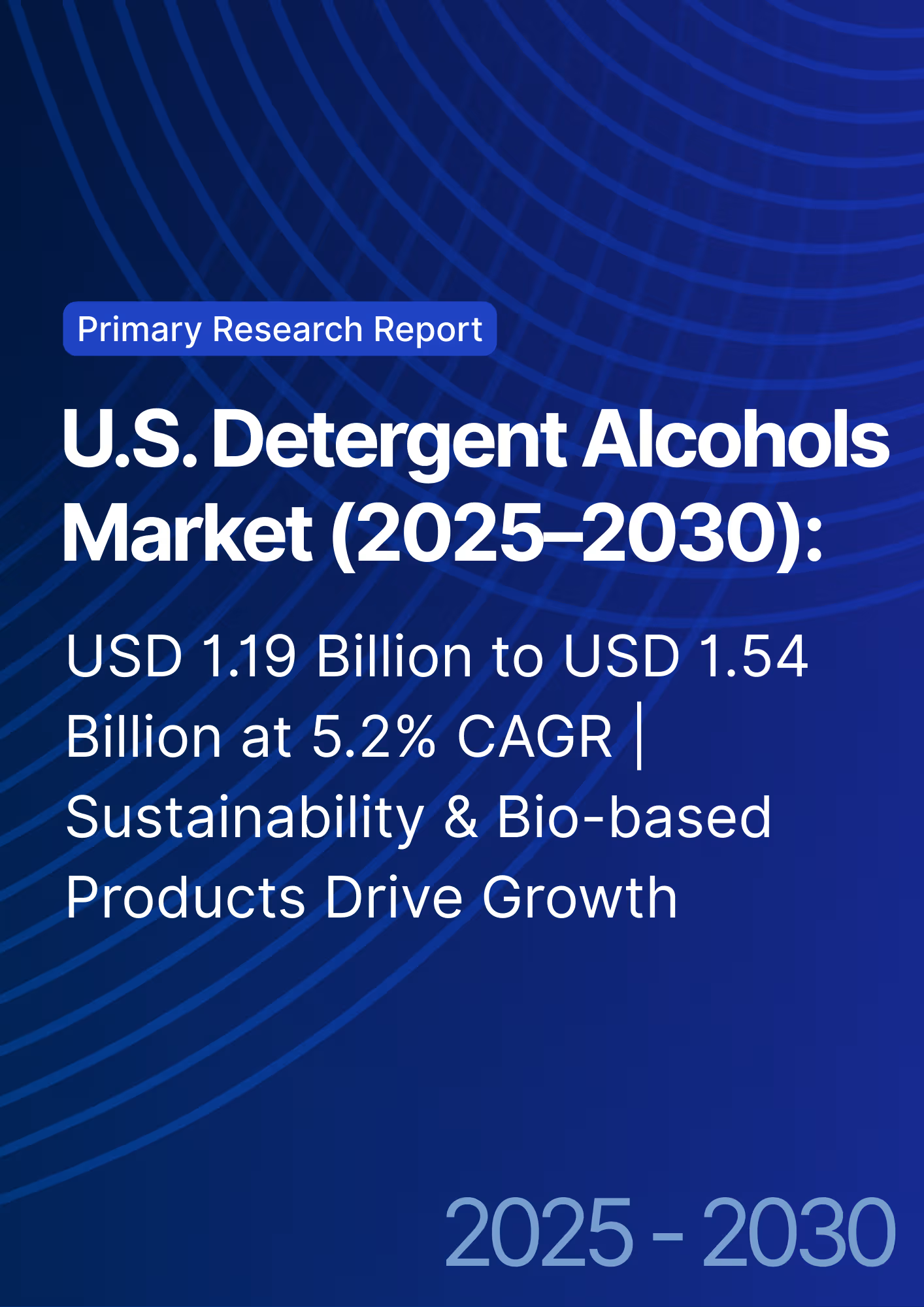
U.S. Detergent Alcohols Market (2025–2030): USD 1.19 Billion to USD 1.54 Billion at 5.2% CAGR | Sustainability & Bio-based Products Drive Growth
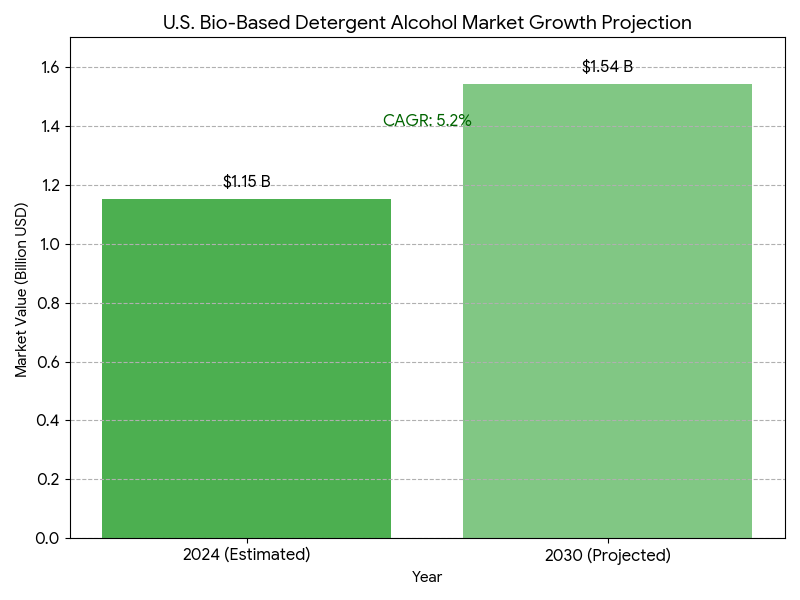
The U.S. detergent alcohols market is expected to grow from USD 1.19 billion in 2025 to USD 1.54 billion by 2030, registering a CAGR of 5.2%. This growth is primarily driven by the increasing demand for sustainable and bio-based surfactants in personal care, home care, and industrial applications. As consumers and businesses alike shift towards eco-friendly, biodegradable, and non-toxic formulations, detergent alcohols made from renewable feedstocks such as vegetable oils are gaining traction. Additionally, stringent environmental regulations, coupled with the rise of green consumerism, are influencing manufacturers to adapt by incorporating bio-based detergent alcohols into their products. The transition towards more sustainable and safe cleaning solutions is expected to sustain growth across various product categories, including household detergents, industrial cleaners, and personal care products.
What's Covered?
Report Summary
Key Takeaways
- Market to grow from USD 1.19B (2025) to USD 1.54B (2030) at 5.2% CAGR.
- Bio-based detergent alcohols to account for 45% of market share by 2030.
- Personal care and household cleaning applications to drive 65% of demand.
- Vegetable oils are the dominant feedstock, accounting for 60% of bio-based alcohol production.
- Sustainability-driven demand for biodegradable alcohols expected to grow 22% annually.
- North America to maintain 50% regional market share for bio-based alcohols.
- EU market regulations to influence U.S. manufacturers towards greener formulations.
- Non-toxic and eco-friendly formulations increasingly favored by consumers.
- Retail and online distribution channels expected to capture 30% of total sales.
- Personal care industry to witness 15% CAGR as consumer demand for eco-conscious products rises.
Key Metrics
Market Size & Share
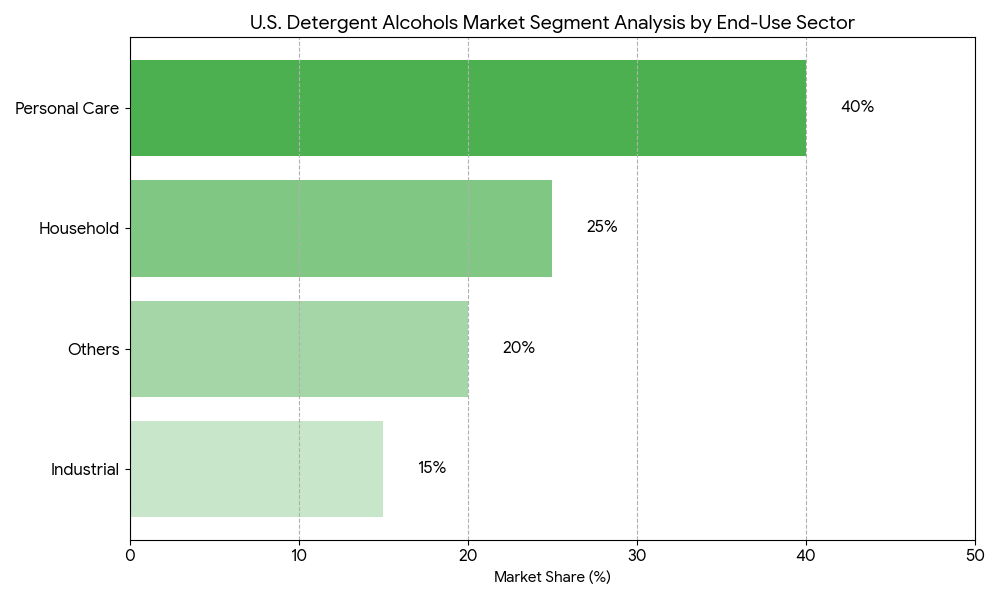
The U.S. detergent alcohols market is set to expand from USD 1.19 billion (2025) to USD 1.54 billion by 2030, driven by increased consumer demand for eco-friendly, non-toxic products. Bio-based alcohols, which are produced from renewable sources like vegetable oils, are projected to dominate the market, representing 45% of total consumption by 2030. Personal care products will lead with 40% of total demand, followed by household cleaning solutions (25%), and industrial applications (15%). Retail and online channels are projected to account for 30% of total sales due to consumer trends favoring e-commerce for sustainable goods.
Market Analysis
The demand for detergent alcohols in the U.S. is driven by an ongoing shift towards bio-based and biodegradable solutions, particularly as eco-conscious consumerism continues to rise. Bio-based detergent alcohols, primarily made from vegetable oils, are increasingly being incorporated into household and personal care formulations, including shampoos, liquid soaps, and dishwashing detergents. This shift is also driven by regulatory frameworks, such as the EPA’s Safer Choice program, pushing for the reduction of harmful ingredients in cleaning products. The continued rise of sustainable product lines and low-toxicity preferences is fostering growth in household, industrial, and personal care sectors.
Trends & Insights
- Eco-Friendly Formulations: The demand for non-toxic, biodegradable products is increasing, pushing the market towards greener chemicals.
- Bio-Based Alcohol Rise: Vegetable oil-derived alcohols are expected to grow rapidly, replacing traditional petrochemical derivatives.
- Personal Care Demand: A 15% CAGR in personal care applications is anticipated, driven by shampoo, soap, and detergent markets.
- Government Support: Policies promoting sustainable chemistry are incentivizing bio-based detergent alcohol production.
- Supply Chain Sustainability: Green production processes improving cost-efficiency and reducing carbon footprints.
- Consumer Trends: Online and eco-conscious retail channels are capturing increasing shares of the market.
- Sustainability Certifications: Retailers and brands increasingly seek certifications for non-toxic products, such as Cradle to Cradle and Green Seal.
- Smart Product Development: AI-driven innovations in formulation to enhance product performance and environmental safety.
- Plant-Based Alternatives: Bio-based surfactants replacing conventional surfactants in detergents.
- Global Supply Chain Impact: Sourcing sustainable raw materials from global supply chains to meet growing consumer expectations.
Segment Analysis
The U.S. detergent alcohols market is divided into several end-use sectors: personal care (40%), household (25%), industrial (15%), and others (20%). The personal care segment, including products such as shampoo, conditioner, liquid soap, and body wash, will experience robust growth due to consumer preferences for natural, eco-friendly formulations. Household applications, including dishwashing detergents and laundry products, will maintain a steady share, driven by green certifications and the push for non-toxic cleaning agents. Industrial usage, particularly in textiles and agriculture, is expanding with bio-based formulations that meet environmental standards. Sodium alcohol ethoxylates (SAEs) are gaining momentum in industrial-grade cleaners and disinfection products.

Geography Analysis
The U.S. is the largest market for detergent alcohols, accounting for 50% of the North American market share. California, Texas, and the Northeast are the primary regions driving demand, supported by stringent environmental regulations and increasing consumer interest in sustainable products. The West Coast is particularly prominent, with San Francisco and Los Angeles leading the way in green product adoption. As demand for bio-based alcohols grows, states with robust agriculture and manufacturing sectors, like Iowa and Illinois, are becoming key suppliers of raw materials for detergent alcohol production.
Competitive Landscape
Key players in the market include BASF, Dow, Clariant, Solvay, and Stepan Company, along with smaller regional players like Kraton Polymers and SABIC. BASF is leading the charge with its bio-based detergent alcohols produced from vegetable oils. Clariant and Solvay are investing heavily in green surfactants, pushing sustainable product lines that cater to cleaning and personal care markets. Stepan Company focuses on ethoxylates and fatty alcohols, optimizing their bio-based formulations for laundry and home care products. Regional manufacturers are leveraging local sourcing and production to capitalize on the growing preference for sustainable products, while multinational firms enhance their product offerings through innovations in formulations and green chemistry practices.
Report Details
Proceed To Buy
Want a More Customized Experience?
- Request a Customized Transcript: Submit your own questions or specify changes. We’ll conduct a new call with the industry expert, covering both the original and your additional questions. You’ll receive an updated report for a small fee over the standard price.
- Request a Direct Call with the Expert: If you prefer a live conversation, we can facilitate a call between you and the expert. After the call, you’ll get the full recording, a verbatim transcript, and continued platform access to query the content and more.
68 Circular Road, #02-01 049422, Singapore
Revenue Tower, Scbd, Jakarta 12190, Indonesia
4th Floor, Pinnacle Business Park, Andheri East, Mumbai, 400093
Cinnabar Hills, Embassy Golf Links Business Park, Bengaluru, Karnataka 560071
Request Custom Transcript
Related Transcripts




68 Circular Road, #02-01 049422, Singapore
Revenue Tower, Scbd, No.52-53, Jakarta 12190, Indonesia
Cinnabar Hills, Embassy Golf Links Business Park, Bengaluru, Karnataka 560071
4th Floor, Pinnacle Business Park, Andheri East, Mumbai, 400093


68 Circular Road, #02-01 049422, Singapore
Revenue Tower, Scbd, Jakarta 12190, Indonesia
4th Floor, Pinnacle Business Park, Andheri East, Mumbai, 400093
Cinnabar Hills, Embassy Golf Links Business Park, Bengaluru, Karnataka 560071